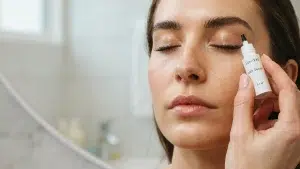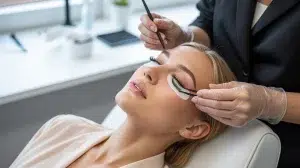
If you have ever read the back of a lash growth product and felt uneasy about the long chemical names, you are not alone. More and more women are deliberately looking for an eyelash serum without prostaglandin, because they want fuller lashes without the darkened eyelids, red eyes or colour changes that the older prostaglandin formulas can cause. This guide explains exactly what a prostaglandin-free serum is, how it works, what to look for on the label, and how to use it so you actually see results. Consider this your honest, no-hype walkthrough.
Quick Answer: An eyelash serum without prostaglandin is a lash-conditioning product that promotes the look of longer, fuller lashes using peptides, biotin, panthenol and botanical extracts instead of prostaglandin analogues such as isopropyl cloprostenate or bimatoprost. It avoids the known prostaglandin side effects – eyelid darkening, iris colour change, hollow eyes and irritation – while still nourishing the lash line. Results are gentler and slightly slower, usually visible in six to twelve weeks, but far safer for sensitive eyes and long-term daily use.
What Is an Eyelash Serum Without Prostaglandin?
An eyelash serum without prostaglandin is a lash-care product formulated to condition and strengthen your natural lashes using nourishing cosmetic ingredients rather than the pharmaceutical growth agents found in older serums. The “without prostaglandin” part is the whole point: it leaves out the family of ingredients – prostaglandin analogues – that originally made lash serums famous but also brought a list of unwanted effects.
Prostaglandins are hormone-like compounds. In the lash world, synthetic versions such as bimatoprost, isopropyl cloprostenate and dechloro-dihydroxy-difluoro-ethylcloprostenamide were borrowed from glaucoma eye drops, where users noticed their lashes growing longer and darker as a side effect. Cosmetic brands then added these analogues to serums to force the lash growth cycle. They work, but they also carry the very risks that push people toward a prostaglandin-free option.
A prostaglandin-free serum takes a different route. Instead of hijacking the hair cycle hormonally, it focuses on creating the healthiest possible environment for the lashes you already have: hydrated, conditioned, protected from breakage and supported at the root. The result is a product you can use daily, around delicate eye tissue, with far less worry. For a broader look at how these products compare across the market, our guide to the best eyelash serum of 2026 breaks down tested options side by side.
The demand is real. As awareness of ingredient safety has grown, “eyelash serum without prostaglandin” has become one of the most searched lash terms, especially among women with sensitive eyes, contact lens wearers and anyone who has reacted badly to a previous serum.
Why Women Are Switching to Prostaglandin-Free Formulas
The move toward a prostaglandin-free serum is not a passing trend – it is a direct response to real experiences. Prostaglandin analogues are effective, but the trade-offs became impossible to ignore once millions of people had used them.
The most talked-about issue is periorbital changes. Prostaglandin serums can darken the skin of the eyelids, and in some cases this discolouration does not fully reverse after stopping. Users have also reported their eyes looking more sunken or hollow over time, a change linked to the effect of prostaglandins on the fat pads around the eye. For anyone using the product for a cosmetic boost, trading longer lashes for shadowed, tired-looking eyes is not a fair deal, and it is the single clearest reason to choose an eyelash serum without prostaglandin instead.
Then there is iris pigmentation. Prostaglandins can increase the brown pigment in the coloured part of the eye – a change that is permanent and was first documented in glaucoma patients, as the American Academy of Ophthalmology explains in its overview of lash lengtheners. It is rarer with topical lash use than with eye drops, but the possibility alone is enough for many to seek an eyelash serum without prostaglandin instead.
Everyday irritation is the final straw for most people. Redness, stinging, itchy eyelids and watering are common complaints, particularly for contact lens wearers and those with naturally sensitive eyes. If your eyes already feel reactive, a gentler route makes sense. These concerns sit in the same family as the questions people ask about whether lash treatments damage natural lashes, which we cover in our honest look at whether eyelash extensions harm your lashes.
It is worth being clear and responsible here: a cosmetic eyelash serum without prostaglandin is not a medicine and makes no drug claims. That is actually part of its appeal. It sits firmly in the beauty category, which means it is designed for gentle daily use rather than pharmaceutical intervention. For anyone who found prostaglandin serums too aggressive, that distinction is exactly what they are looking for.
How an Eyelash Serum Without Prostaglandin Works
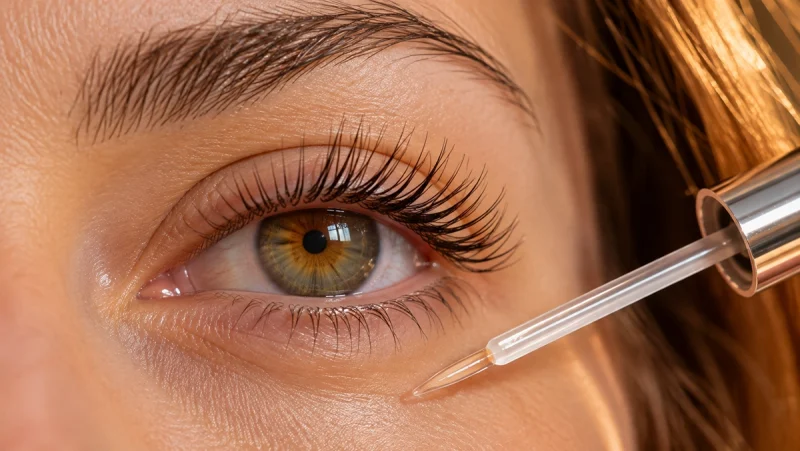
An eyelash serum without prostaglandin works by nourishing and protecting the lash rather than chemically forcing it to grow. Understanding the mechanism helps set realistic expectations, because the effect is cosmetic conditioning, not a pharmaceutical growth cycle override.
Your lashes grow in phases, like all hair. There is an active growth phase, a transition phase and a resting phase before the lash sheds naturally. Prostaglandin serums try to extend the active phase hormonally. A prostaglandin-free serum instead supports the lash you have: it strengthens the shaft so lashes are less likely to snap, hydrates to improve flexibility and shine, and conditions the lash line so each hair can reach its full natural length before shedding. In practice, lashes that would normally break halfway now survive to look longer and fuller.
Peptides are the headline ingredients in most quality formulas. These short chains of amino acids signal the lash follicle environment and are prized in cosmetic science for supporting keratin, the protein lashes are made of. Combined with humectants that draw in moisture, peptides help lashes appear denser and more resilient over a few weeks of consistent use.
The second pillar is conditioning and protection. Panthenol (provitamin B5), biotin, hyaluronic acid and botanical oils coat and soften the lash, reducing the daily micro-damage from rubbing, mascara and makeup removal. Many women do not actually grow dramatically more lashes – they simply stop losing the length they already had. That alone transforms how lashes look.
Because an eyelash serum without prostaglandin relies on gradual conditioning, consistency matters more than intensity. There is no shortcut and no loading dose. For the deeper science of the lash cycle and what genuinely influences it, our ultimate eyelash growth encyclopedia goes further into the biology. The honest takeaway: a prostaglandin-free serum optimises what nature gave you, safely, rather than overriding it.
Eyelash Serum Without Prostaglandin: Ingredients to Look For
Choosing an eyelash serum without prostaglandin comes down to reading the label properly, because “prostaglandin-free” on the front means nothing if you cannot verify it on the back. Reading the ingredient list is the one skill that separates a true eyelash serum without prostaglandin from a clever imitation, so here is what belongs in a good formula and what should make you put the bottle down.
The names to avoid are the prostaglandin analogues themselves. Scan the ingredient list for isopropyl cloprostenate, isopropanol phenyl-hydroxy-pentene dihydroxy-cyclopentane-heptenoate, bimatoprost, latanoprost, travoprost and the long “dechloro-dihydroxy-difluoro ethylcloprostenolamide” variants. If any appear, it is not a prostaglandin-free product, regardless of marketing language on the front of the box. This single check protects you from the side effects discussed earlier.
Now the ingredients worth paying for. Look for peptides such as myristoyl pentapeptide-17 and myristoyl hexapeptide-16, which are the cosmetic workhorses for conditioning lash and brow hair. Biotin supports keratin. Panthenol and hyaluronic acid handle hydration and flexibility. Botanical extracts such as swertia japonica, ginseng and castor oil are traditional lash-nourishing favourites, while vitamin E protects against oxidative stress at the lash line.
A few honest cautions apply even to gentle formulas. Patch test anything new, keep serums off the waterline, and be careful with essential-oil-heavy products if your eyes are very reactive. If you wear extensions, choose a serum explicitly labelled extension-safe, because some oils break down lash glue. The relationship between serums and professional lash work is worth understanding, and our guide on whether eyelash lifts are safe covers the same careful mindset.
One more label-reading tip: shorter, cleaner ingredient lists are often a good sign in this category. A well-built eyelash serum without prostaglandin does not need twenty actives to work – it needs the right few, at sensible concentrations, in a formula designed to sit safely near the eye.

How to Apply an Eyelash Serum Without Prostaglandin
Knowing how to apply an eyelash serum without prostaglandin correctly is the difference between seeing a real change and giving up at week four convinced it does not work. The technique is simple, but the details matter.
Start with a completely clean, dry lash line every night. Remove all makeup, cleanse gently and let the skin dry fully – serum applied over mascara residue or face oil will not reach the lash base and may migrate into the eye. Nighttime is ideal because the product has hours to work undisturbed.
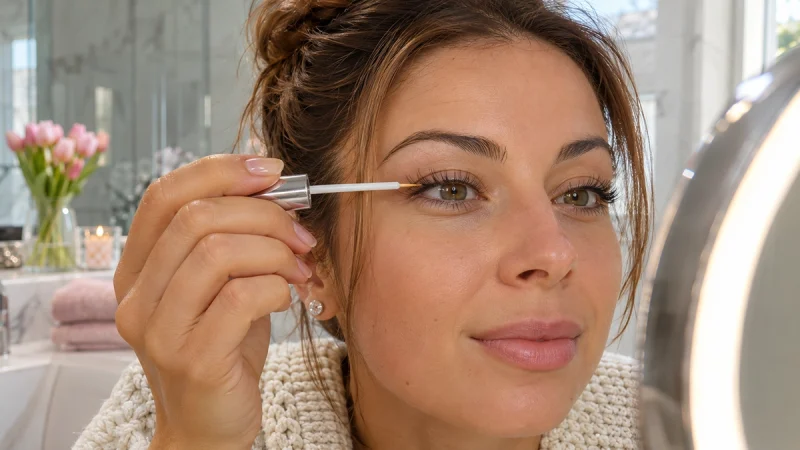
Apply your eyelash serum without prostaglandin like liquid eyeliner, not mascara. Using the fine applicator brush, draw one thin stroke along the upper lash line where the lashes meet the skin, exactly as you would a gel liner. One swipe per eye is enough. You are targeting the base of the lashes, not coating the hairs themselves, and you should never apply it to the lower waterline or inside the eye. If the brush feels loaded, wipe off the excess before application.
Less is genuinely more. A common mistake is over-applying in the hope of faster results, which only increases the chance of the serum seeping into the eye and causing irritation. One thin line, once a day, is the proven approach. Let it dry for a minute before lying down so it sets along the lash line rather than spreading.
Consistency is everything with a prostaglandin-free formula. Because it conditions rather than forces, missing nights sets you back. Build it into your existing routine – most people find pairing it with their nightly skincare, the way they would a serum or eye cream, makes it automatic. The same discipline that keeps a manicure looking fresh applies here, something our readers who follow careful at-home lash tinting routines already know well.
If any stinging, redness or watering develops, stop and let your eyes recover before deciding whether to continue. A good eyelash serum without prostaglandin should feel comfortable – mild cooling is fine, but genuine irritation is a signal, not something to push through.
Realistic Timeline: What to Expect Week by Week
Setting honest expectations is the kindest thing any guide can do, because the number one reason people abandon an eyelash serum without prostaglandin is expecting prostaglandin-speed results from a gentler product. Here is what a realistic timeline actually looks like.
For the first two to four weeks, you will likely see very little, and that is normal. This is the conditioning phase: the serum is hydrating and strengthening the existing lashes, reducing breakage you cannot yet see. Trust the process and keep applying nightly. Many people quit here, right before the visible payoff begins.
Around weeks four to eight, the difference starts to show. Lashes look healthier, shinier and less sparse because fewer are snapping off early. You may notice your mascara going on more evenly or your lashes holding a curl better. This is the conditioning effect becoming visible, and it is exactly what an eyelash serum without prostaglandin is designed to deliver.
By weeks eight to twelve, most consistent users of an eyelash serum without prostaglandin reach their result: lashes that look their fullest, longest natural length. Because the mechanism is cosmetic rather than hormonal, the final effect is more subtle than a prostaglandin serum, but it comes without the shadowed lids or irritation. The trade is gentleness for a slightly slower, softer finish – a trade most people seeking an eyelash serum without prostaglandin are happy to make.
The catch worth knowing: the results are maintained only while you keep using the product. Stop, and over the next lash cycle your lashes gradually return to their untreated baseline. This is true of prostaglandin serums too, but it matters for budgeting your routine. Think of a prostaglandin-free serum as ongoing lash care, like moisturiser, rather than a one-time fix.
How to Choose an Eyelash Serum Without Prostaglandin for You
After years of testing lash products and hearing from readers who switched away from prostaglandin serums, I have learned that choosing the right eyelash serum without prostaglandin is personal – it depends on your eyes, your history and your patience. Here is the honest framework I use.
Start with your sensitivity level, because this is what should steer you toward one eyelash serum without prostaglandin over another. If you have genuinely reactive eyes, wear contacts or have had a bad reaction before, prioritise the shortest, gentlest ingredient list and an explicit “ophthalmologist-tested” or “suitable for sensitive eyes” claim. Fragrance-free and essential-oil-light formulas tend to suit this group best. If your eyes are hardy, you have more room to choose a peptide-and-botanical-rich formula for a stronger conditioning effect.
Next, match the product to your goal. If your lashes are mainly brittle and breaking, a conditioning-led serum heavy on panthenol, biotin and oils will serve you well. If you want the maximum natural density a prostaglandin-free product can offer, prioritise peptide concentration. Be wary of any brand promising prostaglandin-style dramatic results without prostaglandins – that is a marketing red flag, not a formulation breakthrough.
From personal experience, the single biggest predictor of success is not the brand but the consistency of the person using it. The reader who applies a modest serum every single night for three months beats the one who buys the most expensive bottle and uses it twice a week. An eyelash serum without prostaglandin rewards routine over spending.
Finally, think about the whole eye area, not just lashes. Good lash health sits alongside not rubbing your eyes, removing makeup gently and giving lashes an occasional break from extensions or heavy mascara. If you are weighing lash treatments more broadly, our breakdown of whether extensions are worth the cost and how long extensions actually last can help you decide where a serum fits in your routine. A prostaglandin-free serum works beautifully as the low-risk foundation of a long-term lash-care habit.
Your Prostaglandin-Free Lash Serum Questions Answered
What is an eyelash serum without prostaglandin?
It is a cosmetic lash serum that conditions and strengthens your natural lashes using ingredients such as peptides, biotin, panthenol, hyaluronic acid and botanical extracts, while deliberately leaving out prostaglandin analogues like isopropyl cloprostenate and bimatoprost. Because it avoids those pharmaceutical growth agents, it sidesteps side effects such as eyelid darkening and iris colour change, making it suitable for daily use around sensitive eyes.
Does an eyelash serum without prostaglandin really work?
Yes, but differently from a prostaglandin serum. Rather than forcing new growth hormonally, it strengthens and conditions existing lashes so fewer break, letting them reach their full natural length. The result is healthier, fuller-looking lashes – genuine but more subtle than prostaglandin results, and visible usually between six and twelve weeks of nightly use.
Is a prostaglandin-free serum safer for my eyes?
Generally, yes. By avoiding prostaglandin analogues, it removes the main risks associated with those ingredients: eyelid skin darkening, possible permanent iris pigmentation, hollowing around the eye and significant irritation. It is a cosmetic conditioning product, not a drug, so it is designed for gentle ongoing use. Patch testing is still wise, and anyone with an eye condition should check with their doctor first.
How long does it take to see results?
Most people see little in the first two to four weeks, noticeable improvement between weeks four and eight, and their full result around weeks eight to twelve. The timeline is slower than prostaglandin serums because the mechanism is conditioning rather than hormonal. Consistency is essential – nightly application without gaps gives by far the best outcome.
Can I use an eyelash serum without prostaglandin with lash extensions?
Only if the serum is explicitly labelled extension-safe. Some prostaglandin-free formulas contain oils that can weaken lash-extension adhesive and shorten the life of your set. Check the label, and when in doubt ask your lash technician. Extension-safe conditioning serums can actually help by keeping your natural lashes healthy underneath the extensions.
Will my lashes go back to normal if I stop?
Yes. Like all lash serums, prostaglandin-free included, the benefits last only while you keep using the product. If you stop, your lashes gradually return to their untreated state over the next natural lash cycle, usually within a couple of months. Treat it as ongoing lash care, much like a moisturiser, rather than a permanent one-off change.
Is isopropyl cloprostenate a prostaglandin?
Yes – isopropyl cloprostenate is a prostaglandin analogue, so any serum containing it is not prostaglandin-free, even if the front of the packaging suggests otherwise. It is one of the most common prostaglandin ingredients in cosmetic lash serums, which is exactly why reading the full ingredient list matters so much when you are specifically seeking a prostaglandin-free product.
Choosing an eyelash serum without prostaglandin is really a choice to put long-term eye comfort and safety ahead of the fastest possible result. You trade a little speed and drama for a gentle product you can use for years without the shadowed lids, colour changes or irritation that pushed so many women away from prostaglandin formulas. Read the label, apply one thin line nightly, give it a full three months, and let the conditioning do its quiet work. Healthy, resilient lashes are the kind that last.
This article is for general cosmetic information and is not medical advice. Lash serums are cosmetic products, not treatments for any eye condition. If you have an eye condition, wear contact lenses, are pregnant or breastfeeding, or experience persistent irritation, consult a doctor or optometrist before use.
Our other content
- Lash inspiration on Pinterest
- Daily beauty content on Facebook
- Lash tips on TikTok
- Full lash videos on YouTube
- Behind the lashes on Instagram
Kitten
Testing gel systems, lash treatments and at-home nail techniques, with every method tried before it is recommended.