The absorption of active ingredients in the skin depends on more than the product itself
The absorption of active ingredients in the skin often raises questions when a well-planned routine fails to deliver results. You apply creams and serums, yet your skin does not respond as expected. Instead, everything feels like it stays on the surface. This usually does not mean you chose the wrong product. In most cases, the skin is simply not in a receptive state.
Many people react by adding more active ingredients. This rarely solves the issue. The real problem often lies in how the skin functions at that moment. To understand why the same routine does not always work, we need to look deeper than the product list.
A Typical Sign: “It Feels Like the Cream Just Sits on the Skin”
This sensation is very common. You apply your skincare, but it does not melt into the skin. A slippery or heavy layer remains on the surface. When this happens, the absorption of active ingredients in the skin slows down or stops almost completely. The skin does not fully accept what you apply.
This feeling often appears when the skin surface feels uneven. Slower cell renewal can also trigger it. An imbalanced skin barrier plays a role as well. In these situations, the skin protects itself and closes off instead of allowing ingredients to pass through.

The Role of the Skin Barrier
The skin barrier controls what enters the skin and what stays out. When it works well, it protects the skin and still allows beneficial ingredients through. In this state, the absorption of active ingredients in the skin becomes more effective and predictable.
Problems arise when the barrier becomes damaged or overloaded. The skin may then block most substances. Skincare products remain on the surface and show little visible effect. This happens even when the products themselves are well formulated.
How Cellular Activity and Microcirculation Influence Absorption
Absorption does not depend on the skin surface alone. Cellular activity plays an important role. When skin cells lack energy, their processes slow down. As a result, the absorption of active ingredients in the skin becomes less efficient.
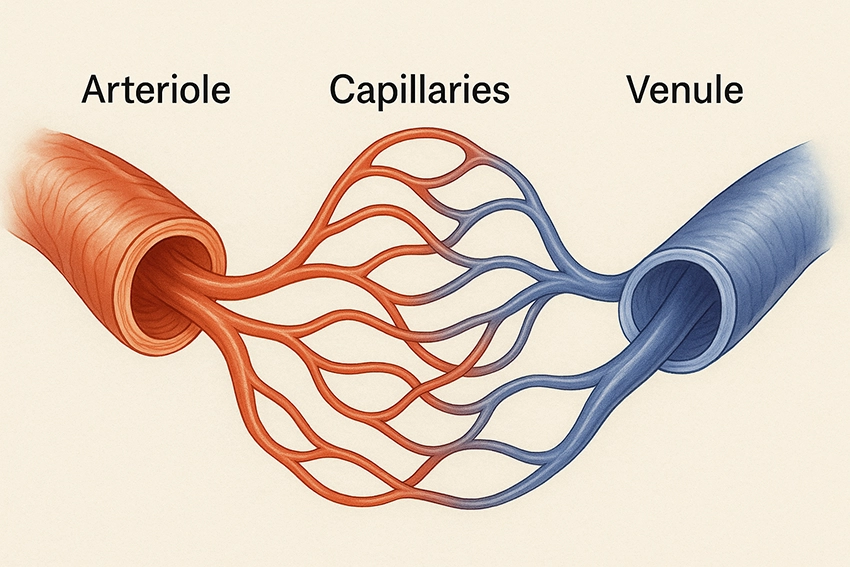
Microcirculation supports this process by delivering oxygen and nutrients. When circulation slows, the skin becomes less responsive. Even high-quality ingredients struggle to perform. The skin simply cannot process them properly.

What Blocks Active Ingredients from Entering the Skin?
Several factors can prevent proper absorption. Dead skin cells often build up on the surface. This creates a physical barrier that blocks penetration. Overloaded routines can cause similar issues. Too many layers confuse the skin instead of helping it.
In some cases, the skin becomes overstimulated. It then stops distinguishing between useful and unnecessary signals. To protect itself, it blocks almost everything. This response may not look dramatic, but it greatly reduces routine effectiveness.
How Can You Improve Absorption?
The first step is restoring balance. Gentle and regular exfoliation removes surface buildup. This allows the absorption of active ingredients in the skin to improve naturally.
Simplifying the routine also helps. Fewer steps often work better than long, complex routines. The skin needs time to process what it receives. Giving it that space leads to better results.

What Makes the Same Routine Work Better?
The same routine can produce very different results. Everything depends on the skin’s condition. When the barrier stays balanced and cellular activity remains high, absorption improves noticeably.
True effectiveness does not come from constant product changes. It comes from strengthening the foundation. Once the skin functions well, familiar products start to perform better. This is where conscious skincare truly pays off.