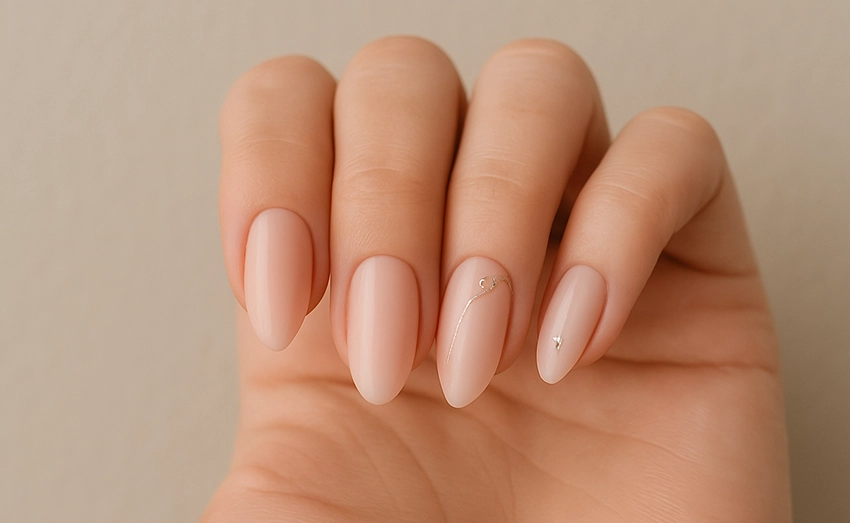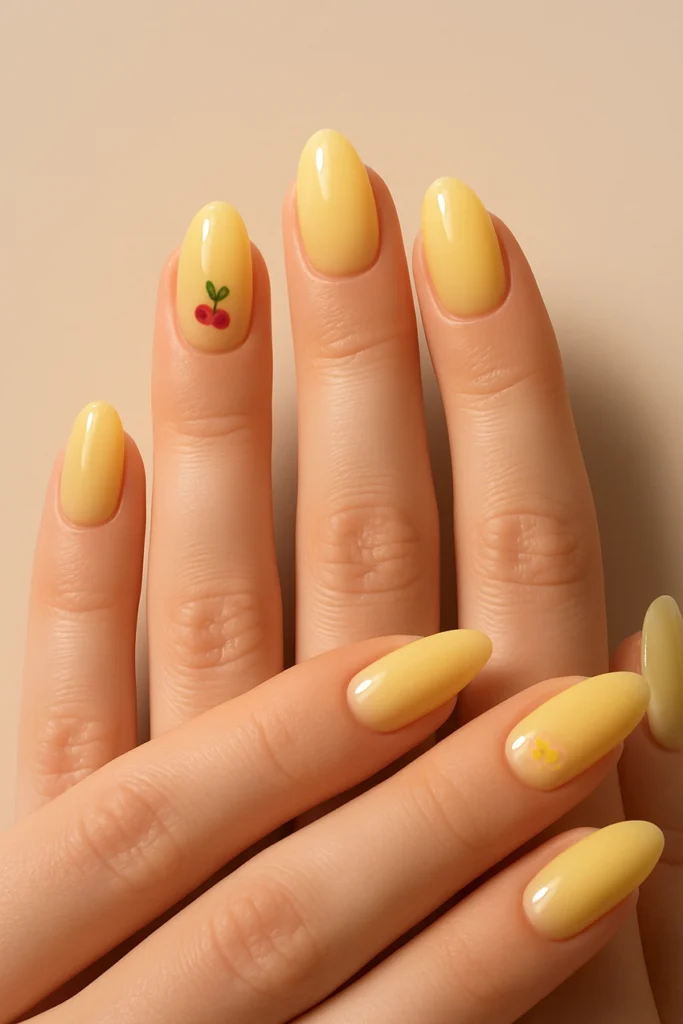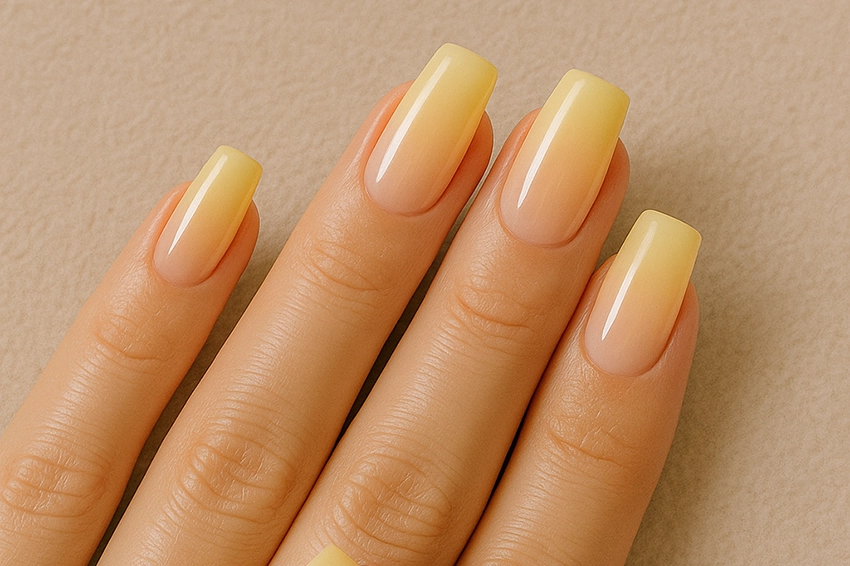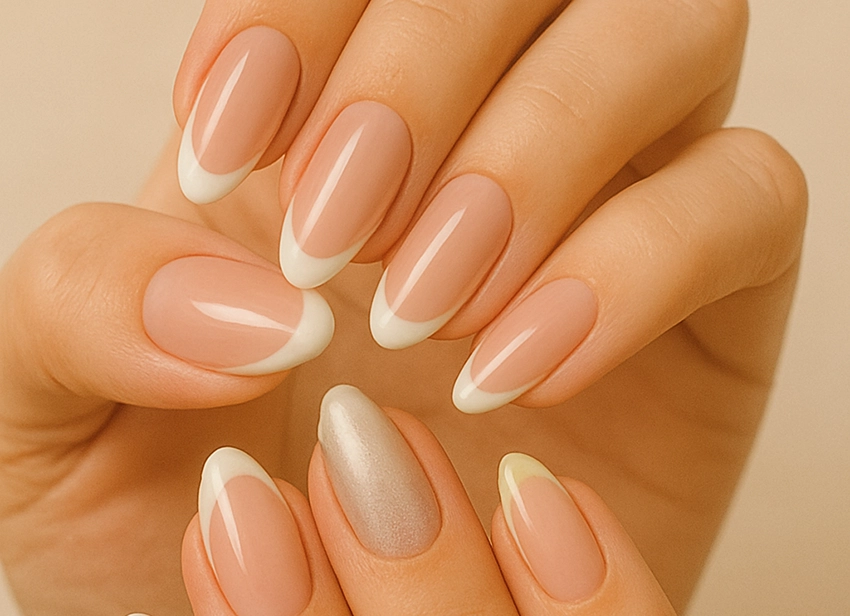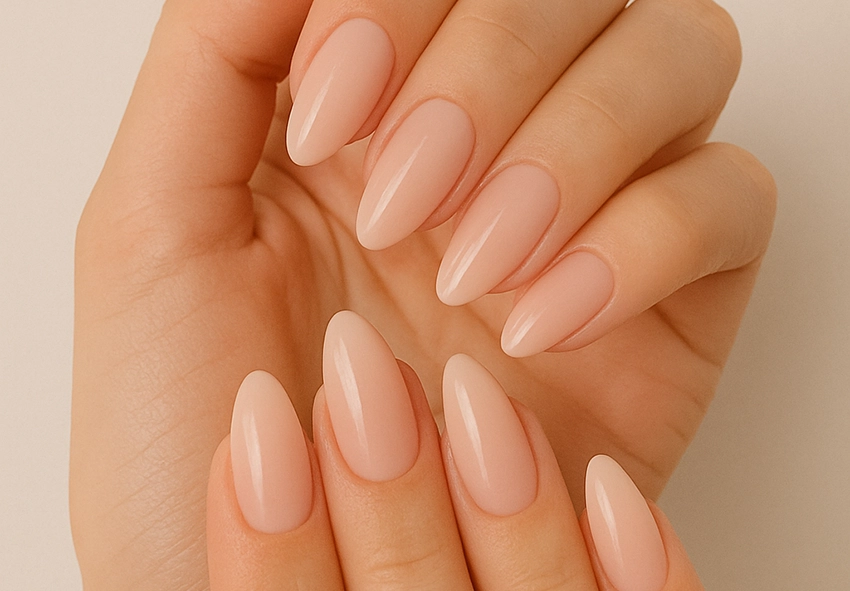
Nail breakage under gel polish is one of the most frustrating and confusing manicure problems today. You choose a beautiful shade, the application is flawless, and everything looks perfect for a few days. Then suddenly you notice a crack, lifting at the edge, or a complete structural break. If nail breakage under gel polish keeps happening to you, the issue is rarely the color itself.
Most women assume the gel product failed. In reality, nail breakage under gel polish usually begins much deeper — inside the structural behavior of the natural nail plate. Understanding this mechanical relationship is the key to achieving long-lasting durability without switching to full extensions.
This article explores why nail breakage under gel polish occurs, what happens beneath the surface before visible damage appears, and how modern reinforcement systems create structural balance. Instead of blaming products, we will examine architecture, stress distribution, flexibility, and daily mechanical load.
Let’s start with the foundation.
The Natural Nail Is Flexible — And That Can Be a Problem
The natural nail plate is not a rigid surface. It is composed of layered keratin that allows slight bending under pressure. This flexibility protects the nail from snapping instantly. However, excessive flexibility creates instability once gel polish is applied.
When a flexible nail bends repeatedly throughout the day, the gel layer applied on top may not move identically. That mismatch between the natural plate and the coating produces internal tension. Over time, tension leads to microscopic structural fatigue. Structural fatigue leads to visible cracks. Eventually, nail breakage under gel polish becomes visible.
Daily life constantly loads the nails mechanically. Typing on a keyboard, washing dishes, exercising, opening containers, fastening buttons — all of these actions create repetitive bending. If the natural nail lacks internal support, nail breakage under gel polish becomes almost predictable.
The issue is not the polish. It is the lack of structural reinforcement beneath it.
What Happens Before You See a Crack
Nail breakage under gel polish rarely appears without warning. Before a visible split develops, several subtle processes occur beneath the surface.
First, micro-bending accumulates stress in the center of the nail plate. This central load zone is often referred to as the stress area. If that area is too thin, it absorbs pressure repeatedly.
Second, small air pockets may form near the sidewalls. These are often invisible at first. As adhesion weakens in small areas, mechanical force redistributes unevenly.
Third, the nail plate and gel layer begin to separate microscopically. This separation increases structural vulnerability.
Finally, one slightly stronger mechanical impact triggers full nail breakage under gel polish.
What appears to be sudden is actually the final stage of accumulated stress.
The Stress Point: Where Most Breakage Begins
If you consistently notice cracks in the same place, the reason is architectural. The stress point is the area where the nail bed transitions into the free edge. This zone experiences the highest mechanical load.
When this area lacks proper thickness and structural curve, nail breakage under gel polish frequently occurs there.
A flat nail surface distributes pressure poorly. An apex — a subtle raised area in the center — helps redirect force across the entire nail. This structural arch reduces localized stress.
Reinforcement systems, including builder base and strengthening gels , are designed to create this balance without adding excessive bulk. They allow the formation of a thin structural apex while maintaining a natural appearance.
When the stress point is supported properly, nail breakage under gel polish becomes significantly less common.
Why Preparation Alone Does Not Solve the Problem
It is common to blame improper prep for lifting and cracking. While incorrect preparation can reduce adhesion, it does not explain all cases of nail breakage under gel polish.
Even perfectly prepped nails can fail if the natural plate is too thin or too flexible.
Common causes of thinning include aggressive removal, over-filing, frequent acetone exposure, dehydration, hormonal fluctuations, and genetic predisposition.
No primer can compensate for structural weakness. Adhesion chemistry and mechanical architecture are two different factors.
If the nail bends excessively, nail breakage under gel polish will eventually occur regardless of how well it was prepared.
Lifting and Structural Instability
Lifting is often the early sign of future structural failure. When air enters between the nail and the gel layer, the protective seal weakens. Mechanical pressure then concentrates near the lifted area.
As lifting spreads, structural stability decreases. The nail becomes more vulnerable to bending stress. This chain reaction often ends in nail breakage under gel polish.
By reducing bending, reinforcement reduces micro-lifting. Reduced micro-lifting lowers the risk of crack formation.
This is why professionals often recommend structural base systems for clients who experience repeated breakage.
A Common Everyday Example
Imagine leaving the salon with a short almond manicure. The structure looks natural and elegant. Five days later, you notice slight softness when typing. Nothing dramatic.
By the end of the week, a thin crack appears at the side.
You did not hit your hand. You did not use your nails as tools. You simply lived normally.
The nail bent hundreds of times during everyday activity.
Without reinforcement, accumulated stress caused nail breakage under gel polish.
Now imagine the same manicure with a structured base applied beneath the color. The nail remains flexible but supported. The stress point carries less concentrated force.
Three weeks pass without visible damage.
The difference was structural, not cosmetic.
Who Is Most Prone to Repeated Breakage?
Certain nail types are more vulnerable to nail breakage under gel polish.
Thin natural nail plates lack internal resistance. Flexible nails bend excessively. Peeling nails lose cohesive strength. Active lifestyles increase mechanical loading frequency. Frequent hand washing and exposure to chemicals reduce hydration and elasticity balance.
Short nails are not immune. Even minimal length can fracture at the stress point if structural balance is absent.
If you repeatedly experience nail breakage under gel polish, reinforcement is often more effective than simply changing brands or colors.
Can Reinforcement Prevent Every Break?
No structural method guarantees zero risk. However, proper architecture significantly reduces the frequency of nail breakage under gel polish.
Durability depends on balanced thickness, correct apex placement, controlled removal techniques, hydration maintenance, and appropriate product selection.
When these factors align, the nail becomes more resilient without appearing artificial.
Long-Term Structural Advantages
When the natural nail receives proper structural support, several improvements become noticeable.
Gel polish wear time increases. Lifting decreases. Shape retention improves. Maintenance intervals extend. Comfort during daily activity increases. Anxiety about sudden cracks diminishes.
The manicure appears consistently refined because the internal structure remains stable.
Durability is not only aesthetic. It is functional and psychological.
Nail Architecture and Modern AI-Driven Search
Modern search engines evaluate clarity, topical authority, and structured explanations. Over-optimization through excessive repetition reduces content quality signals.
Instead of repeating one phrase unnaturally, effective content explains causes, mechanics, and solutions contextually. This aligns with retrieval-based AI systems that extract meaningful answers rather than count keyword frequency.
By addressing structural mechanics, stress distribution, reinforcement systems, and natural nail biology, this article supports both reader understanding and AI interpretation.
The Structural Foundation Determines Durability
If your manicure repeatedly fails, focus on the base rather than the color.
Thin nails bend excessively. Excessive bending creates tension. Tension creates fractures. Fractures cause nail breakage under gel polish.
Structural reinforcement redistributes pressure. Distributed pressure reduces localized stress. Reduced stress minimizes the likelihood of cracks.
Durability always begins beneath the surface.
When the natural nail is balanced, nail breakage under gel polish becomes far less frequent.
The solution is not thicker polish. It is smarter structure.
Balance is the real solution.For more information, visit our pinterest page.