It never happens at a convenient time. One second your set looks flawless, the next you feel that unmistakable give at the edge — your acrylic nail is lifting. Knowing how to fix a lifted acrylic nail quickly and correctly is the difference between a five-minute repair that holds for another two weeks and a mistake that leads to a bacterial infection, a torn natural nail, or a full removal you did not plan for. This guide covers exactly what to do, what not to do, and — critically — when the repair option is off the table entirely and soaking off is the only smart move.
To fix a lifted acrylic nail at home, dry the area completely, clean with an alcohol wipe, apply a small drop of nail glue into the lifted gap, press firmly for 30 seconds, and seal the edge with a clear top coat. Never press a lifted nail down without drying it first — trapped moisture is the direct cause of green nail syndrome. If the lifting covers more than half the nail, pain is present, or green discoloration is visible, soak off instead of repairing.
Table of Contents
- Fix Lifted Acrylic Nail: Why It Happens in the First Place
- Trapped Moisture Hazards Under a Lifted Acrylic Nail
- Your Emergency Repair Kit for a Lifted Acrylic Nail
- Step-by-Step: How to Fix a Lifted Acrylic Nail at Home
- When to Soak Off Instead of Repair
- Preventing Future Lifting: The Real Causes
- Your Lifted Acrylic Nail Questions Answered
- Infographic and Video

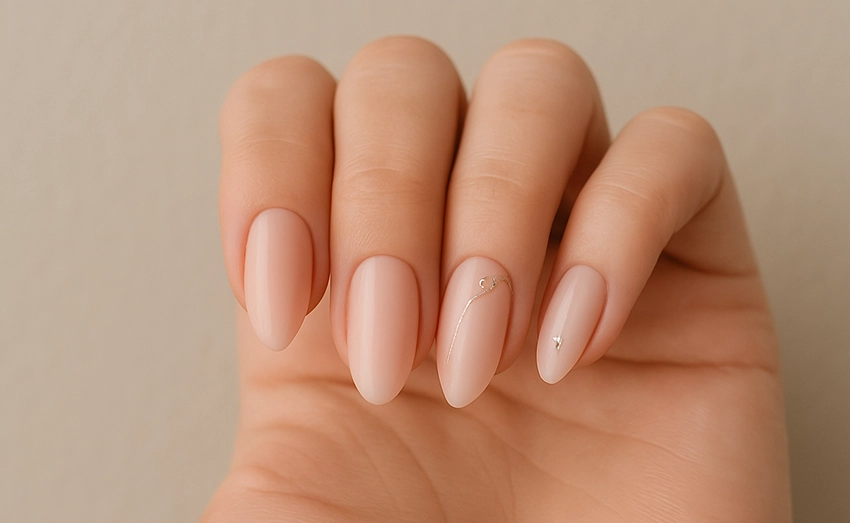
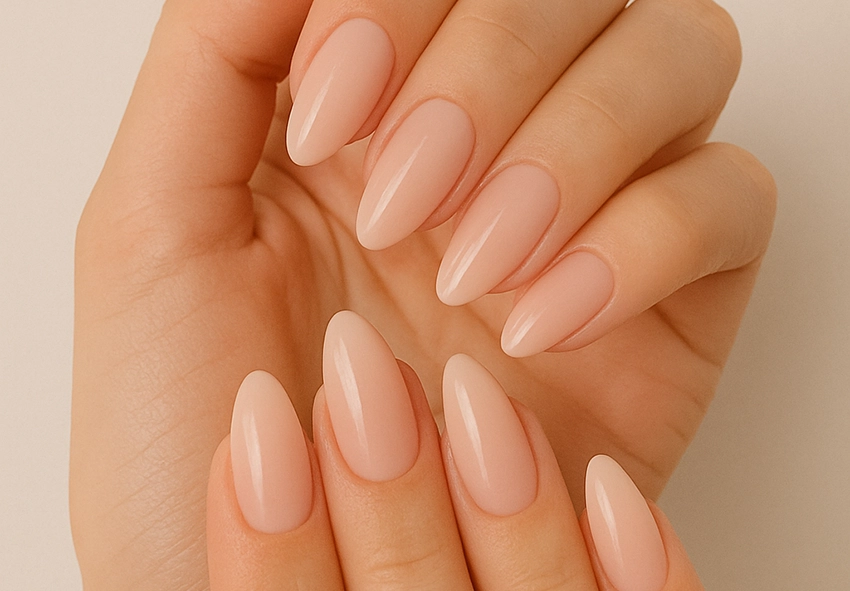
fix lifted acrylic nail at home emergency repair USA woman NYC spring 2026 nude almond acrylic
Fix Lifted Acrylic Nail: Why It Happens in the First Place
Before reaching for the glue, understanding why your acrylic lifted matters — because the cause determines whether a repair is appropriate or whether you are about to make things worse.
Lifting occurs when the bond between the acrylic product and the natural nail plate weakens or breaks entirely, creating a gap where there should be none. The most common reasons this happens are poor nail prep at the time of application, cuticle or skin contact during application, overexposure to water, skipped fill appointments, and physical impact.
Oil is the primary enemy of acrylic adhesion. Natural nail oils, residual hand lotion, or even normal skin oils that migrate onto the nail plate during the day can prevent the acrylic from bonding properly at the cuticle line. This is why lifting almost always starts near the base of the nail rather than at the tip — that is the zone closest to the living skin and its oil production.
Overdue fill appointments are another leading cause. Every two to three weeks of natural nail growth creates a visible gap between the cuticle and the acrylic base. As that gap grows, the mechanical leverage on the acrylic increases — the longer the nail, the more force gets applied to the base with every tap, press, and grip. A nail that has gone four or five weeks without a fill is structurally compromised before any additional stress is applied.
Physical impact — catching the nail on fabric, a door frame, or any hard surface — can snap the adhesive bond suddenly even on a perfectly applied set. This kind of lifting is the hardest to prevent and the most urgent to address, because the gap created is immediate and may be larger than gradual lifting.
Whatever the cause, the moment lifting begins, the clock starts. The gap between the acrylic and the natural nail becomes an entry point for moisture, bacteria, and debris. What you do in the next hour matters significantly for both the repair outcome and your nail health.
Trapped Moisture Hazards Under a Lifted Acrylic Nail
This section matters more than most nail content acknowledges, and skipping it is where most at-home repair mistakes begin. When a lifted acrylic nail traps moisture underneath it, the consequences range from inconvenient to medically significant — and the window between those two outcomes is shorter than most people realize.
The gap created by a lifted acrylic is a near-perfect environment for bacterial and fungal growth: warm, dark, damp, and nearly oxygen-free. The specific bacteria that thrives here is Pseudomonas aeruginosa — a common organism found in water, soil, and on skin surfaces that becomes problematic when given a confined, moist environment to colonize. The result is what nail professionals call “greenies,” technically known as green nail syndrome or chloronychia.
The first visible sign is a green, yellow-green, or dark discoloration on the natural nail beneath the acrylic. It is often mistaken for mold, but it is bacterial rather than fungal in origin. It is not dangerous if caught and treated early. It becomes more complicated if the lifted nail is simply glued back down over active discoloration — sealing bacteria into the warm gap accelerates the infection rather than containing it.
Fungal infections are a separate but related risk. Fungi, particularly dermatophytes and Candida species, also thrive in the moist gap beneath a lifted acrylic. One study found that among women who developed nail concerns after removing acrylic nails, the majority presented with fungal infection — and in most of those cases, the pathway was trapped moisture from prior lifting that went unaddressed.
The practical rule from this is simple and non-negotiable: never press a lifted nail back down without thoroughly drying the area first. If moisture is already present under the lifting — which you can check by gently pressing on the acrylic and observing whether the gap looks wet — the nail needs to be dried completely before any glue is applied. Pressing wet surfaces together with nail glue traps that moisture permanently, creating exactly the bacterial incubator you are trying to avoid.
If you already see green or yellow discoloration under your lifted acrylic, the repair option is closed. Skip to the soaking-off section below. Do not attempt to glue down, fill, or overlay a nail with visible discoloration — that is when a professional consultation or, in persistent cases, a dermatologist visit becomes the appropriate next step.
For more on how nail lifting and moisture interact with nail health long-term, our post on nail breakage under gel polish and how to fix it covers the underlying biology in useful depth.
Your Emergency Repair Kit for a Lifted Acrylic Nail
The difference between a repair that holds and one that fails in three hours is almost entirely about having the right materials and using them in the right order. These are the items worth keeping in a dedicated nail kit at home — none of them are expensive, and all of them are available at CVS, Walgreens, or online.
Nail glue — specifically a brush-on or precision-tip nail glue formulated for artificial nails, not standard super glue. Cyanoacrylate-based nail glue sets in 30 to 60 seconds on contact with the small amount of moisture on the nail surface. The brush-on format gives you more control than squeeze-tip bottles and reduces the risk of flooding the gap with too much product, which is its own problem.
Alcohol prep pads — individually wrapped isopropyl alcohol wipes, the kind used for medical prep. These clean the lifted area of oil and residual moisture more effectively than any other household product. They evaporate quickly without leaving residue.
A fine-grit nail file — 180 to 240 grit. Not for aggressive filing, but for lightly smoothing the lifted edge and the surrounding area before applying glue. Rough edges catch on everything and accelerate further lifting.
A clear gel top coat — this is the step most home repair guides skip, and it is the one that determines whether your repair lasts two days or two weeks. A thin layer of clear top coat or a gel top coat cured under an LED lamp seals the edge between the repaired acrylic and the natural nail, preventing water and soap from infiltrating the bond during hand-washing.
Cuticle oil — to apply after the repair is fully dry. Cuticle oil keeps the surrounding skin hydrated without migrating onto the nail plate if applied carefully to the skin rather than the nail surface.
Optional: acrylic powder and nail glue combination — for slightly more advanced home repairs where the lifting has created a visible gap or the acrylic surface is uneven. A layer of nail glue followed by a small amount of clear acrylic powder, applied and buffed smooth, creates a harder, more durable repair surface than glue alone.
Optional: builder gel — if you have a small LED lamp at home, a thin layer of builder gel over the repaired area creates a chip-resistant reinforcement that outperforms any glue-and-top-coat combination. This is the closest to a salon-grade repair you can achieve with home tools. Our guide on builder gel versus base coat explains the difference and helps you understand which one fits your home setup.
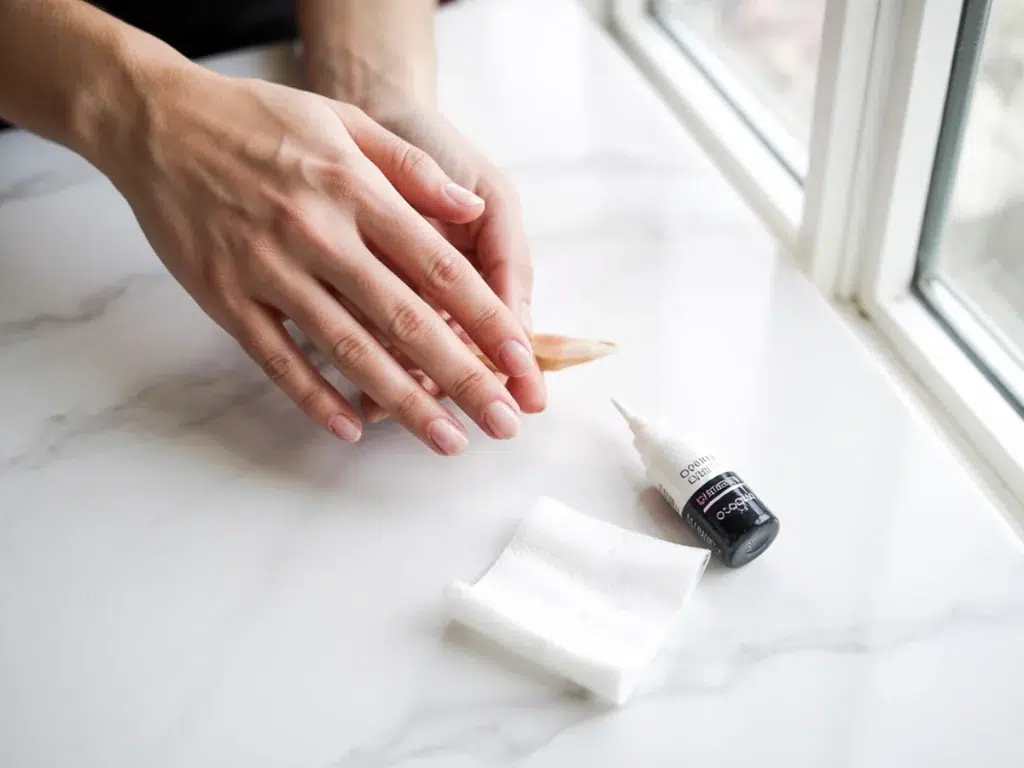
lifted acrylic nail moisture hazard green nail risk home repair tools alcohol wipe nail glue close up
Step-by-Step: How to Fix a Lifted Acrylic Nail at Home
Work methodically through these steps. Rushing any single step — especially the drying and cleaning — is what causes repairs to fail within a day.
Step 1 — Assess before touching anything. Look at the lifted nail carefully. How much of the nail has lifted? Is there any green, yellow, or dark discoloration under the acrylic? Is the lifting causing pain or is the natural nail visibly torn underneath? If the answer to any of those questions indicates significant damage or infection, go directly to the soaking-off section. If the lifting is minor — edge or tip lifting without discoloration or pain — proceed.
Step 2 — Dry the area completely. This is not optional. Use a clean piece of tissue or cotton to gently blot any moisture from around and under the lifted edge. Then use a blow dryer on a cool setting for 30 seconds directed at the nail. Follow this with an alcohol prep wipe, which draws out remaining moisture through evaporation. Allow the alcohol to fully evaporate — about 60 seconds — before moving on.
Step 3 — Lightly file the lifted edge. Using a fine-grit file, gently smooth the underside of the lifted acrylic and the natural nail surface beneath it. This removes any residual oil and creates a slightly rough texture that the glue can bond to. Do not file aggressively — you are not trying to remove product, just roughen the surface.
Step 4 — Apply glue precisely. Using a brush-on glue or precision-tip applicator, place a single small drop at the entry point of the lifted edge. Allow capillary action to draw the glue into the gap — do not flood the area. For small edge lifts, this one drop is often sufficient. For wider gaps, apply to the furthest point of the lift and allow the glue to spread inward.
Step 5 — Press and hold. Press the lifted acrylic firmly onto the natural nail, starting at the cuticle end of the lift and working toward the edge. Hold with steady, firm pressure for a full 30 seconds. Most people hold for five seconds and wonder why the bond fails — the glue needs time to set through the full depth of the gap.
Step 6 — File the seam smooth. Once the glue has set — allow at least two minutes before touching — use your fine-grit file to smooth any raised edges or rough spots at the repair site. A smooth surface is both more comfortable and less likely to catch on fabric or surfaces and re-lift.
Step 7 — Seal with top coat. Apply a thin layer of clear top coat or gel top coat over the entire nail, with particular attention to the repaired edge. If using gel top coat, cure under your LED lamp. This seal is what extends the repair from a few days to a couple of weeks.
Step 8 — Apply cuticle oil to the surrounding skin. Avoid getting oil on the nail plate itself, which would compromise the fresh adhesive bond. Apply carefully to the cuticle and side walls and allow it to absorb fully.
The repair should feel solid immediately after drying. Any wobble or flex in the repaired nail is a sign the glue did not fully penetrate the gap — allow the top coat to fully cure, then test again. If movement persists, the lifting may be more extensive than a surface repair can address.
For guidance on how repairs interact with removal later, our post on safe gel nail removal at home covers the acetone soak-off process in detail and is directly relevant when your repaired nail eventually needs to come off.
When to Soak Off Instead of Repair
Knowing when not to repair a lifted acrylic nail is as important as knowing how to fix one. There are clear situations where attempting a repair makes things materially worse, and understanding them protects both your natural nail and your overall nail health.
Soak off when more than half the nail has lifted. A repair works by re-bonding a small separated area. When the majority of the acrylic has lifted — whether at the tip, the sides, or near the cuticle — the structural integrity of the remaining bond is already compromised. Gluing a mostly-lifted nail back down creates a large trapped air pocket that will collect moisture and bacteria. The nail will simply re-lift again, usually faster than the first time. Remove it cleanly and start fresh.
Soak off when any green, yellow, or dark discoloration is visible. This indicates bacterial or fungal activity is already present. Gluing down over an active infection seals it in and creates conditions for it to spread. The nail needs to come off, the natural nail needs to breathe and be treated, and no new product should go on until the discoloration has grown out or been treated. A diluted white vinegar soak or rubbing alcohol applied twice daily to the bare nail helps clear minor Pseudomonas infections — more persistent discoloration warrants a conversation with a dermatologist.
Soak off when the natural nail is visibly damaged underneath. If you can see that the natural nail has torn, split, or separated from the nail bed beneath the acrylic, the priority shifts entirely to the natural nail. Applying any adhesive or product over a damaged nail bed prolongs the damage and increases infection risk. The natural nail needs to be uncovered, assessed, kept clean and dry, and allowed to recover.
Soak off when there is pain. A repaired lifted nail should not hurt. Pain during or after a lift indicates the natural nail has been stressed, possibly torn, or that the lifting has caused the natural nail to separate from the nail bed at points beyond what is visible. Pain also lowers your pain threshold for proper repair technique — you will not press firmly enough, hold long enough, or apply adequate pressure because it hurts.
Soak off when the nail has gone more than four weeks without a fill. At this stage the leverage on the acrylic base is significant enough that a home repair is unlikely to hold. A properly filled set at this stage would also be appropriate, but that requires salon-level technique and product. Home glue on a heavily grown-out nail provides a short-lived fix that typically lifts again within days.
The soak-off process itself matters. Never force or pry a lifting nail — even a nail that is mostly detached. Filing down the surface of the acrylic to a thin layer, then soaking in acetone using foil wraps or a bowl soak for 15 to 20 minutes, allows the remaining product to dissolve without stripping layers of natural nail with it. Forcing a nail that has not fully dissolved is the primary cause of the thin, peeling, damaged natural nails that many women attribute to acrylics themselves.
For context on how fill timing affects the condition of both your set and your natural nails, our guide on how to maintain artificial nails covers the fill schedule that minimises lifting in the first place.

fix lifted acrylic nail step by step home repair pressing down nail glue cuticle edge USA spring 2026
Preventing Future Lifting: The Real Causes
Fixing a lifted acrylic nail is a useful skill. Not needing to use it frequently is a better goal. Most persistent lifting — the kind that happens within a week of a fresh set or fill — has specific, addressable causes rather than being unavoidable bad luck.
The preparation of the natural nail before application is the single highest-impact variable in acrylic longevity. Oil, lotion residue, or moisture on the nail plate at the time of application directly prevents the acrylic monomer from bonding to the keratin surface. A proper prep involves cleaning with an alcohol wipe or acetone, applying a nail dehydrator, and using a pH-balancing nail primer before any product touches the nail. Skipping dehydrator and primer — common in budget salons and all DIY kits — is the most common cause of early lifting in new sets.
Cuticle management during application matters significantly. Acrylic applied over living cuticle tissue that has not been properly pushed back will lift as the skin continues to move and grow. The product bonds to the cuticle rather than the nail plate, and within days that bond fails. This is why a fill on an over-grown cuticle lifts faster than one done on properly prepped nail tissue.
Water exposure in the 24 hours after a fresh set or fill is another underappreciated cause of early lifting. Wet nails swell slightly as they absorb moisture, then contract as they dry. This expansion and contraction cycle during the initial cure period weakens the bond before it has fully set. Wearing gloves for dishwashing and avoiding prolonged hand soaking for the first 24 hours after your appointment makes a measurable difference in how long that fill holds.
I learned this through firsthand experience after a period of consistently getting lifting within five to seven days of fills. Once I started asking my technician specifically about their prep products — whether they were using primer, what brand of monomer — and began keeping my first 24 hours after a fill as dry as possible, my sets started running the full two-to-three week fill cycle without any edge lifting at all. The prep conversation with your technician is worth having.
Daily cuticle oil applied carefully to the skin around the nail — not the nail plate itself — keeps the surrounding tissue supple and prevents the dehydration and cracking that creates micro-gaps at the nail perimeter where lifting begins. Apply it to the skin, not the surface of the acrylic. Our post on HEMA-free gel polish and nail health covers the chemistry of nail adhesion in more detail if you want to understand why oil placement matters so specifically.

fix lifted acrylic nail result lifestyle wear Los Angeles spring 2026 nude almond acrylic repair after
Your Lifted Acrylic Nail Questions Answered
Can I use super glue to fix a lifted acrylic nail? Standard household super glue and nail glue share the same base chemistry — cyanoacrylate — but nail-specific formulas are calibrated for use on the nail plate, set at a more controlled speed, and are designed to be removed with acetone rather than requiring mechanical force. In a genuine emergency, super glue works as a very temporary fix, but it bonds more aggressively, is harder to remove cleanly, and is more likely to cause damage during soak-off. Keep a small bottle of actual nail glue in your kit — it costs under three dollars and is available at every drugstore.
How long does a home repair on a lifted acrylic nail last? A properly executed home repair — dry nail, clean surface, correct glue application, top coat seal — typically holds for five to twelve days depending on how you use your hands. It is a bridge to your next fill or salon appointment, not a permanent fix. Book that appointment within a week of the repair rather than pushing it further.
My nail keeps lifting in the same spot. What is causing it? Recurring lifting in the same location almost always indicates a prep issue at that specific nail. Common causes are that the cuticle on that finger grows more aggressively, that you use that finger more for high-impact tasks, or that there is a subtle shape mismatch between that nail’s natural curve and how the acrylic was applied. Mention it specifically to your technician at your next fill — a targeted adjustment to prep or application technique on that nail usually resolves it.
Can I get a fill over a repaired lifted nail? Yes, if the repair held cleanly and there is no discoloration or damage to the natural nail. Your technician will file the repaired area before applying new product. Let them know you did a home repair so they can assess the adhesion and clean up any uneven surface before building on it. Do not attempt a DIY fill over a repair that still shows flex or movement.
What is the green spot under my acrylic nail? A green spot under a lifted acrylic nail is almost always a Pseudomonas aeruginosa bacterial infection — the condition commonly called green nail syndrome. It is not mold and is usually a minor concern when caught early. Remove the acrylic, keep the area clean and completely dry, and apply diluted white vinegar or rubbing alcohol twice daily until the discoloration grows out. Do not apply any new product over discolored nail tissue. If the green spread is significant, worsening, or accompanied by swelling or pain, see a dermatologist.
Is it safe to leave a lifted acrylic nail for a few days without fixing it? No — not without protection. A lifted acrylic left open collects moisture, soap, and debris with every hand wash. Within 48 to 72 hours in a damp environment, the conditions for bacterial colonisation are well established. If you cannot do a proper repair immediately, keep the nail as dry as possible, avoid submerging it, and get the repair done within 24 hours. If the gap is large, a bandage worn over the nail when washing hands significantly reduces moisture intrusion while you wait.
When should I see a professional instead of fixing a lifted acrylic at home? When pain is present, when discoloration is visible, when the natural nail appears damaged or separated from the nail bed, or when the lifting is extensive enough that a home repair cannot address it completely. A nail technician can assess the damage, remove the product cleanly if needed, and advise on whether the natural nail needs a recovery period before a new set. For persistent infection signs, a dermatologist is the right next step — not the nail salon.
A lifted acrylic nail handled correctly takes under ten minutes to fix and holds until your next appointment. Handled incorrectly — glued down wet, forced back without cleaning, or ignored until the infection establishes itself — it becomes a significantly bigger problem. The steps are simple. The patience required for each one is the only real skill involved.
Infographic and Video
Fix a Lifted Acrylic Nail: Emergency Repair Steps at a Glance
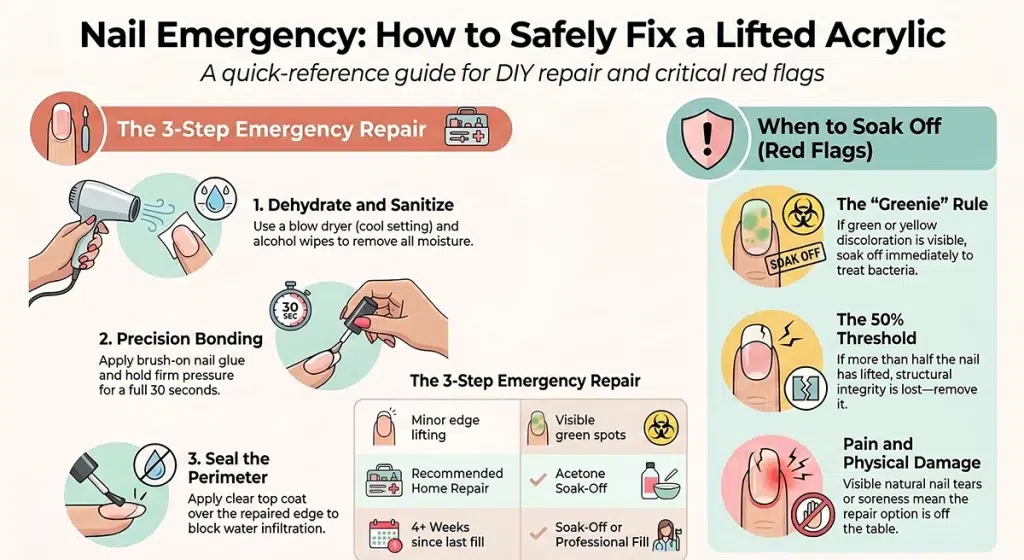
fix lifted acrylic nail at home step by step emergency repair guide infographic USA 2026