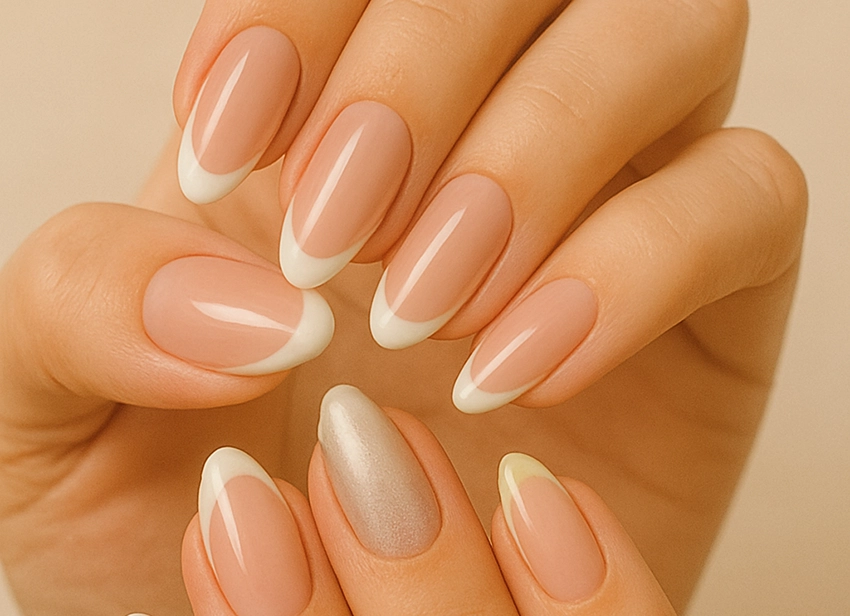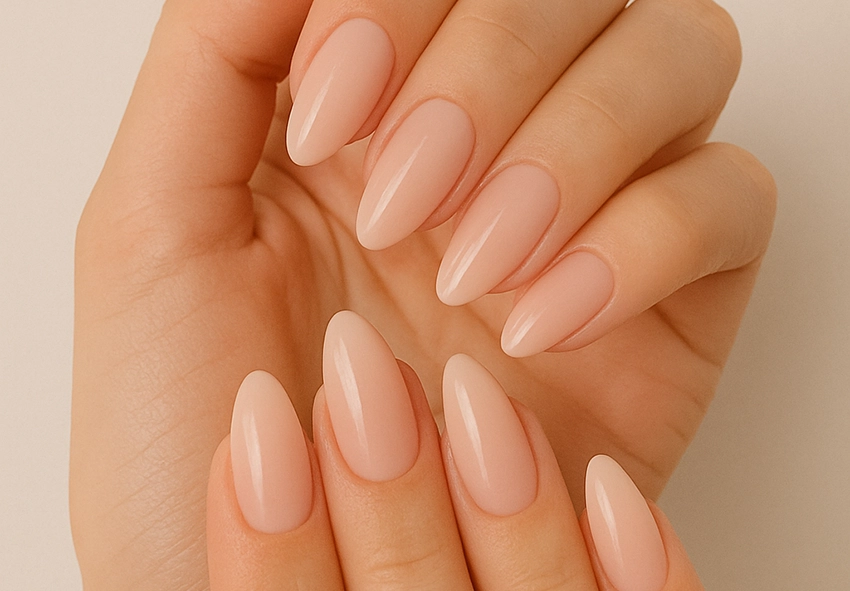
The quest for the perfect manicure is a journey every beauty-conscious woman understands. Whether you are navigating the high-pressure boardrooms of London or enjoying a weekend brunch in New York City, your hands are often your most visible calling card. In 2026, the debate between press-on nails vs acrylics has reached a fever pitch. While acrylics have long been the industry titan for durability and length, the technological revolution in press-on adhesives and materials has made them a formidable challenger. This guide is designed to help you navigate this choice with the precision of a professional, ensuring your nail health, budget, and aesthetic remain in perfect harmony.
The Modern Manicure Verdict. Choosing between press-on nails vs acrylics depends on your lifestyle priorities. Acrylics offer unmatched structural strength and custom shaping for 3-4 weeks but require a higher financial and time investment. Press-ons provide a damage-free, 10-minute application that is significantly more cost-effective for 2026’s fast-paced trends. For long-term nail health, press-ons are the superior choice, while acrylics remain the gold standard for those seeking extreme length and professional artistry.
Table of Contents
- Understanding the Core Differences
- Cost-Benefit 1 Year Analysis: The Financial Truth
- Natural Look Tips: Fooling the Professionals
- The Durability Factor: Lifestyle Compatibility
- Safe Press-On Removal: Protecting Your Natural Plate
- Press-on Nails vs Acrylics FAQ
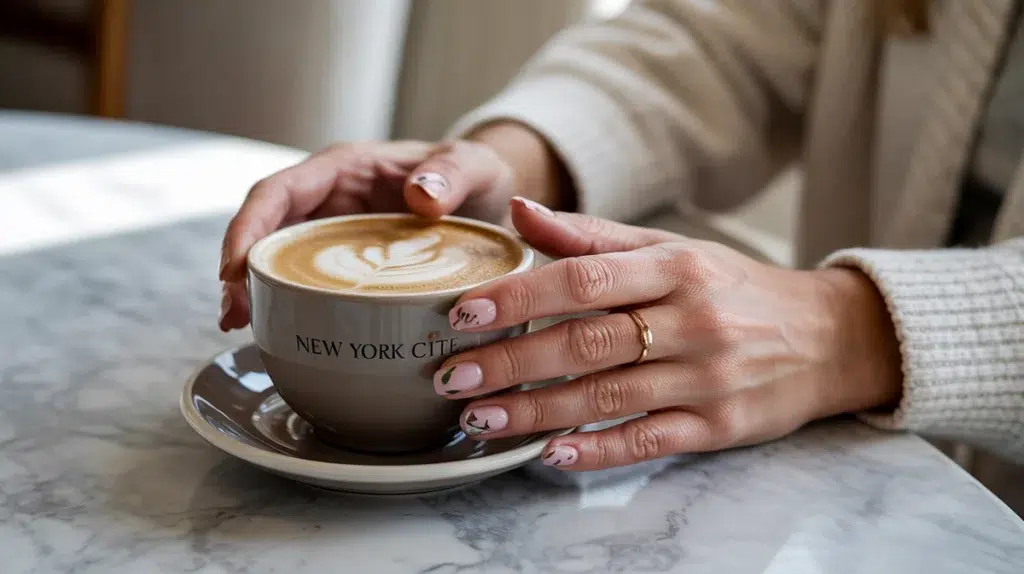
Press-on nails vs acrylics comparison featuring luxury manicures in a high-end setting
Understanding the Core Differences
To make an informed decision, we must first look at the chemistry and application of both systems. Acrylic nails are a combination of a liquid monomer and a powder polymer that creates a hard protective layer over your natural nails. This process requires professional ventilation and skill to ensure the bond is secure and the shape is flattering. In contrast, modern press-ons are high-quality ABS resin tips pre-designed with professional art, applied using either medical-grade adhesive tabs or cyanoacrylate glue.
The shift in 2026 is largely driven by “Information Gain”—users are discovering that the “salon-only” look is no longer exclusive to the salon. As a Kittennail expert, I have monitored how high-end press-on brands now use the same gel top coats found in luxury boutiques, closing the gap in visual quality. The real difference now lies in the commitment: acrylics are a marriage, while press-ons are a series of delightful dates.
Cost-Benefit 1 Year Analysis: The Financial Truth
When evaluating press-on nails vs acrylics, most women only look at the cost of a single set. However, a one-year analysis reveals a staggering difference in investment.
The Acrylic Investment
In major metropolitan areas like London or NYC, a fresh set of high-quality acrylics averages £60/$75. To maintain them, you need a “fill” every 3 weeks to address regrowth.
- Initial Sets (4 per year): £240 / $300
- Fills (13 per year): £520 / $650
- Removal/Tipping: £100 / $125
- Annual Total: Approximately £860 / $1,075 (excluding travel and 26+ hours of salon time).
The Press-On Alternative
Luxury press-ons in 2026 average £20/$25 per set. Many are reusable if handled with care.
- Bi-weekly Sets (26 per year): £520 / $650
- Home Removal Kit: £40 / $50
- Annual Total: Approximately £560 / $700.
The Verdict: Choosing press-ons can save you over £300/$375 annually, while granting you back nearly two full days of your life previously spent in a salon chair. Furthermore, the lack of “fill” appointments means your nails always look freshly done, rather than showing a gap of regrowth.
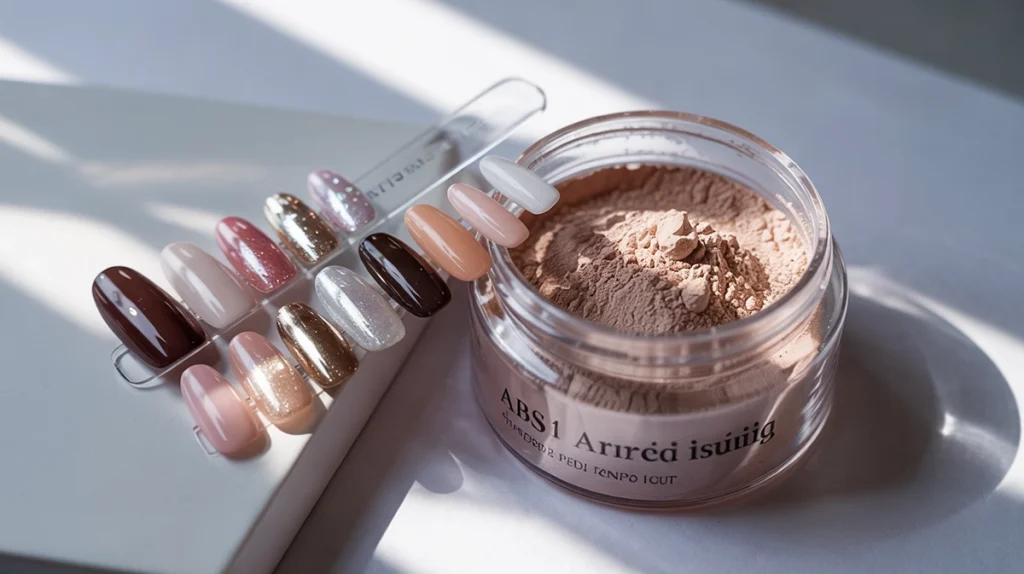
Close-up of press-on nails vs acrylics materials showing professional quality textures.
Natural Look Tips: Fooling the Professionals
The biggest fear with press-ons is the “fake” look. However, achieving a natural aesthetic that rivals acrylics is entirely possible with these expert techniques.
- Size Selection is Crucial: Never use a tip that is too wide for your nail bed. If you are between sizes, always size down or file the sides of a larger tip to fit your cuticle perfectly.
- The Cuticle Push: Use an orange stick to gently push back your cuticles before application. This allows the press-on to sit slightly “under” the cuticle, mimicking the way a natural nail grows.
- Buff the Surface: Lightly buffing your natural nail plate removes oils and creates a “grip” for the glue, preventing that tell-tale lifting at the edges.
- Matte vs. Gloss: In 2026, a high-gloss gel top coat is the hallmark of a professional set. If your press-ons look dull, apply a quick layer of UV-cured top coat to give them that salon-fresh acrylic depth.
The Durability Factor: Lifestyle Compatibility
In the debate of press-on nails vs acrylics, lifestyle is the ultimate tie-breaker. Acrylics are physically bonded to your nail plate. If you are an athlete, a gardener, or someone who performs heavy manual tasks, acrylics provide a structural reinforcement that press-ons cannot match.
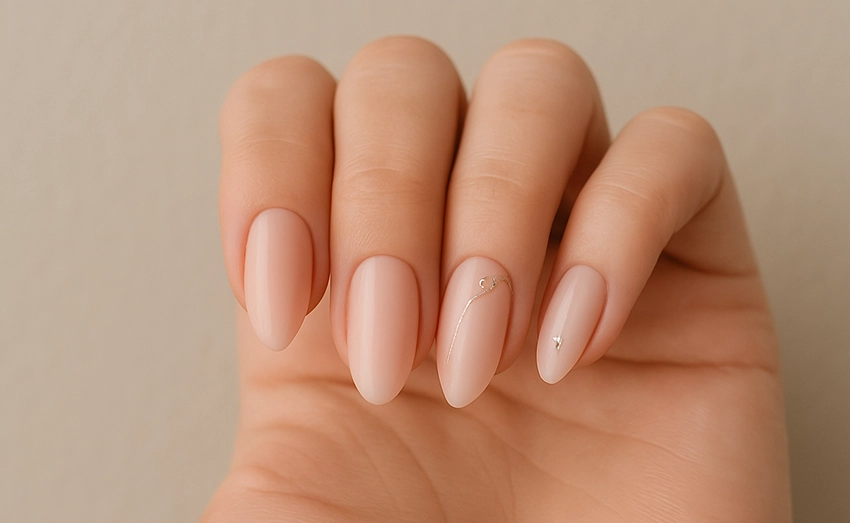
However, for the modern digital nomad or office professional, press-ons offer a unique advantage: versatility. You can wear a conservative “milky bath” almond shape for a Monday meeting and switch to a “spring blossom” stiletto for a Friday night gala in minutes. Acrylics lock you into one look for a month, which can often feel stifling for the fashion-forward woman.

A natural look press-on manicure being worn by a professional woman in London.
Safe Press-On Removal: Protecting Your Natural Plate
The primary reason to choose press-on nails vs acrylics is nail health. Acrylic removal often involves aggressive filing and prolonged acetone exposure, which can thin the nail plate over time. Press-ons, when removed correctly, leave the nail plate entirely intact.
The 2026 Removal Method
- The Oil Soak: Submerge your hands in a bowl of warm water mixed with dish soap and a generous amount of olive or jojoba oil.
- Patience over Power: After 10-15 minutes, the oil will begin to break down the adhesive bond.
- The Dental Floss Trick: Gently slide a piece of dental floss under the edge of the press-on and move it back and forth to lift the nail without force.
- Hydrate: Immediately apply cuticle oil to replenish the moisture lost during the soak.
Press-on Nails vs Acrylics FAQ
Do press-on nails fall off easily?
In 2026, with professional-grade glue and proper prep, press-ons can last up to 14 days. Most “pop-offs” are caused by improper cleaning of the natural nail oils before application.
Can I reuse my press-on nails?
Yes! If you use adhesive tabs, they are infinitely reusable. If you use glue, you can gently file away the dried glue residue from the back of the tip to wear them again.
Are acrylics better for short nail beds?
Acrylics can “extend” a nail bed visually through the use of cover-pink powders. However, short-length press-ons are now specifically designed to provide the same camouflage for nail biters or those with naturally petite beds.
Which is better for travel?
Press-ons are the ultimate travel companion. If an acrylic nail breaks in a foreign city, you are at the mercy of a local salon. If a press-on pops off, you can fix it in 60 seconds in your hotel room.
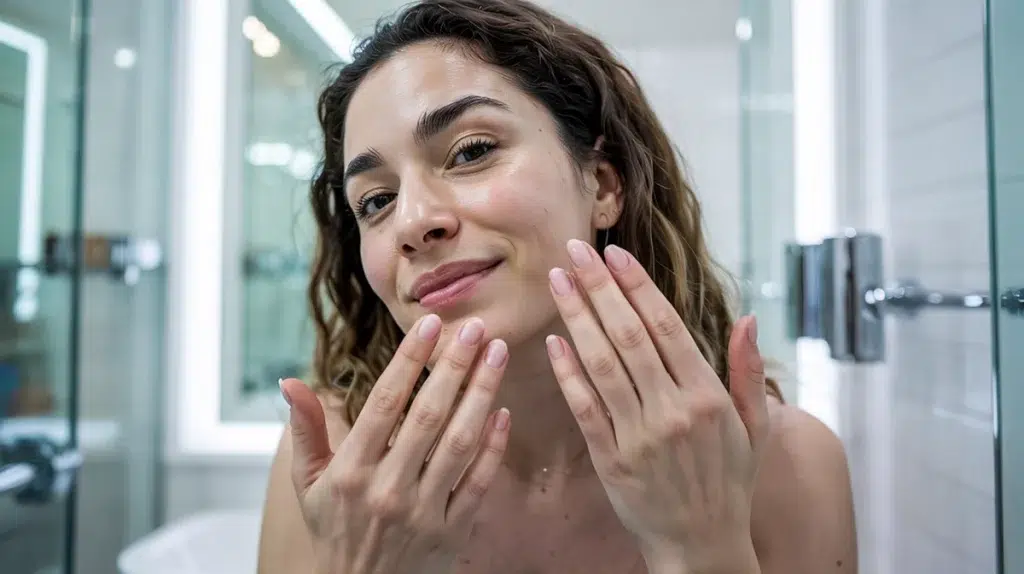
Healthy natural nails after safe removal of press-on nails.
Summary and Final Thoughts
The decision between press-on nails vs acrylics is no longer about quality—both can look stunning. It is about your relationship with time and health. In 2026, as we lean towards more sustainable and less invasive beauty routines, the press-on is winning the hearts of women who want the “Kittennail” look without the salon commitment. Whichever you choose, prioritize the health of your natural nail plate, as it is the foundation of all beauty.
The Manicure Comparison Matrix
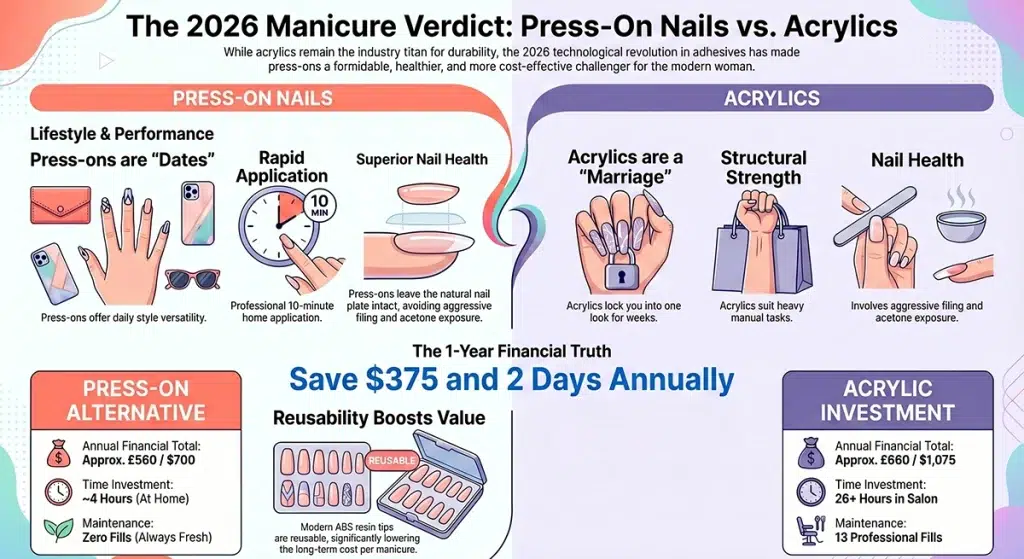
Infographic organizing the 2026 cost-benefit data between press-ons and acrylics, highlighting price, time, and damage levels.