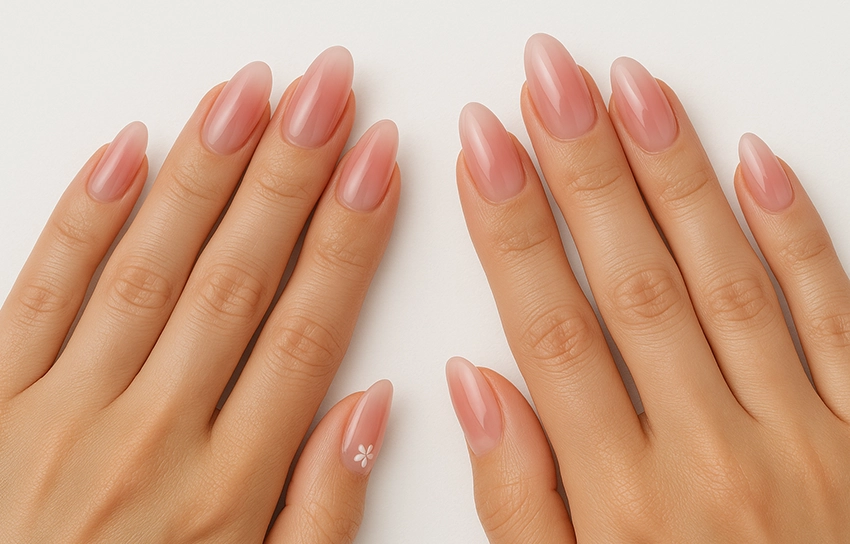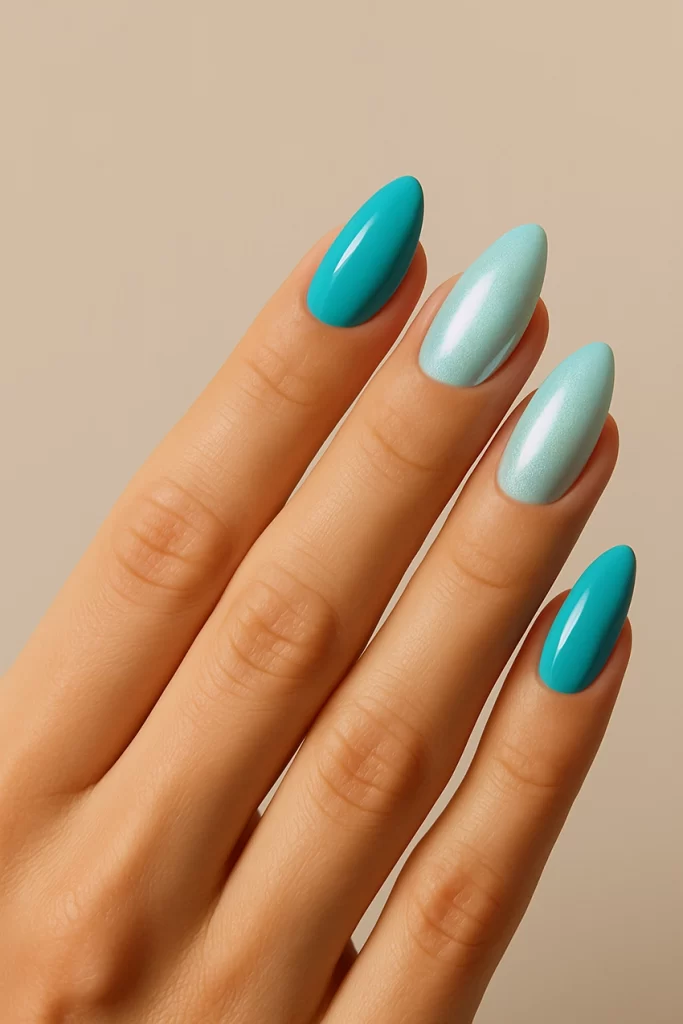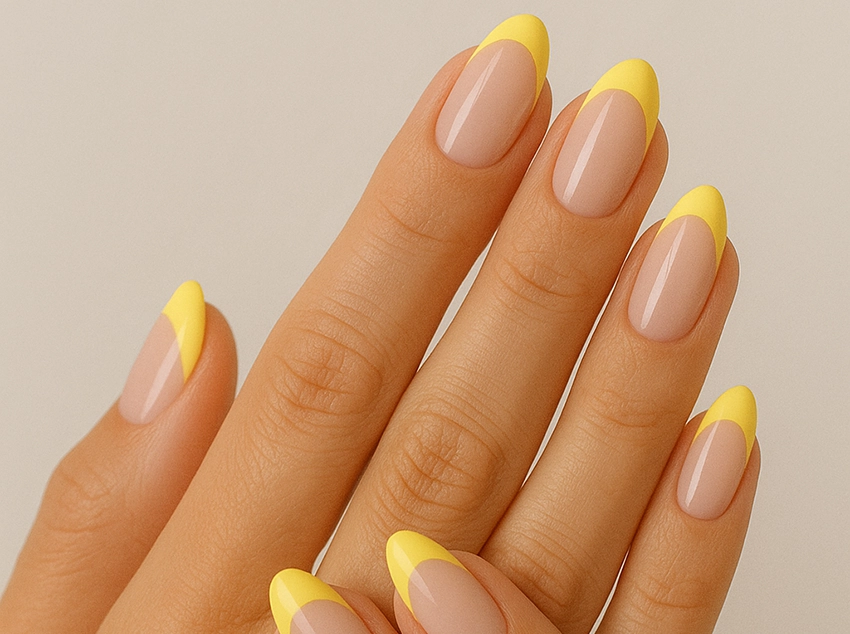
A perfect manicure is more than just a pop of color; it is a boost of confidence that lasts for weeks. However, for many of us, that beautiful set of nails has recently come with a hidden cost: itching, redness, and weakened nail beds.
As a senior writer for Kittennail.com, I have spent years tracking the evolution of nail technology, and I can tell you that 2026 marks a pivotal shift. We are moving away from traditional formulas toward a safer, more inclusive standard. Understanding HEMA-free gel polish is no longer just a trend for those with sensitive skin—it is the gold standard for anyone who values long-term health as much as aesthetics.
HEMA-free gel polish is a professional-grade nail coating formulated without Hydroxyethyl Methacrylate, the primary ingredient linked to skin sensitization and contact dermatitis.
In 2026, switching to HEMA-free options is essential to prevent lifelong allergies while maintaining the high-gloss, chip-resistant finish that gel lovers expect. This transition ensures your beauty routine remains a source of joy, not a health risk.
Table of Contents
- What Exactly is HEMA and Why the Sudden Shift?
- Top 10 HEMA-Free Brands UK: The 2026 Leaders
- Cracking the Code: Identifying HEMA in Labels
- The HEMA-Free Salon Transition: How to Guide Your Technician
- Expert Tips for Maintaining Sensitive Nail Beds
- HEMA-Free Gel Polish FAQ
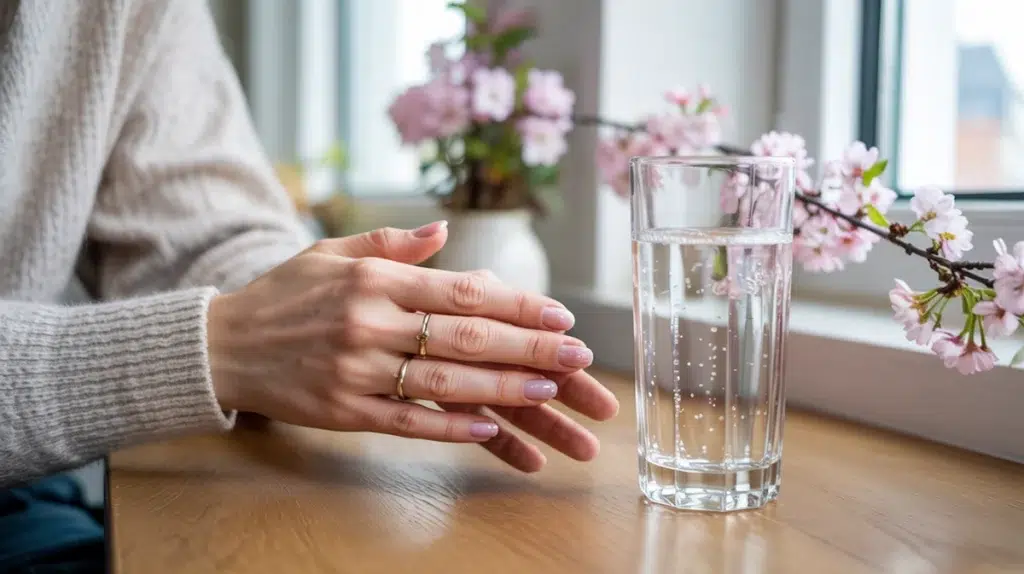
HEMA-free gel polish manicure in lavender on a woman’s hand in a sunny London apartment.
What Exactly is HEMA and Why the Sudden Shift?
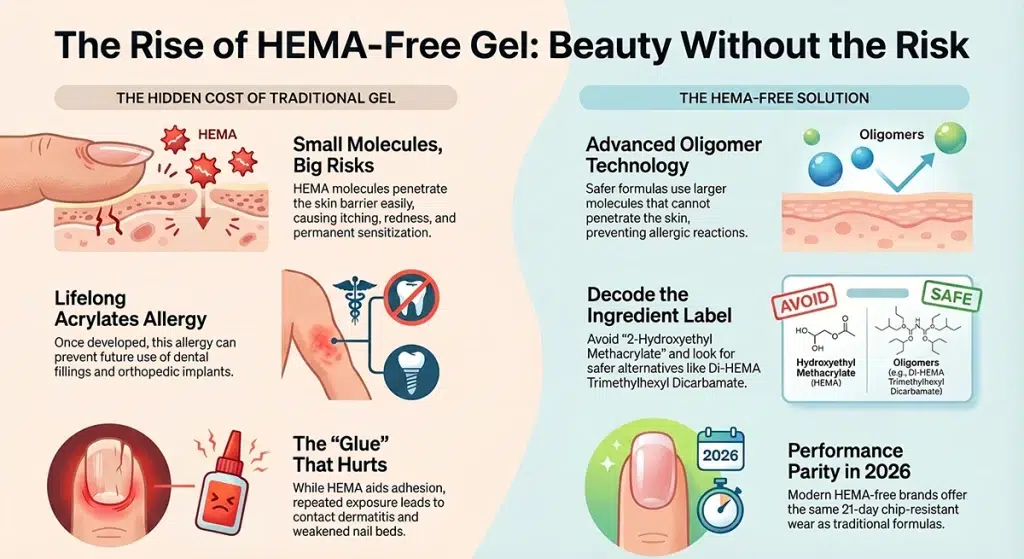
For decades, HEMA (2-hydroxyethyl methacrylate) has been the “glue” that makes gel polish work. It is a monomer that helps the polish adhere to the nail plate and creates that hard, durable finish we love. So, why are we now seeing it removed from our favorite bottles? The problem lies in its molecular size. HEMA molecules are very small, meaning if the product touches your skin before it is cured under a lamp, those molecules can easily penetrate the skin barrier.
Over time, repeated exposure can lead to a condition known as acrylates allergy. Once your body develops this sensitivity, it is usually permanent. This doesn’t just mean you can’t wear gel polish anymore; acrylates are used in medical procedures, such as dental fillings and orthopedic surgeries. By choosing HEMA-free gel polish today, you are protecting your future self. In 2026, the industry has finally mastered formulas that offer the same 3-week wear without the risk of sensitization.
I remember a personal turning point last spring in a London salon. After a standard manicure, my cuticles felt like they were on fire. I realized that even as a professional, I was ignoring the warning signs of ingredient buildup. Switching to HEMA-free changed everything—no more irritation, just healthy, glowing nails.
Top 10 HEMA-Free Brands UK: The 2026 Leaders
The UK has become a global hub for nail innovation, particularly in the realm of safety. If you are looking for HEMA-free gel polish that delivers professional results at home or in the salon, these ten brands are leading the charge this year.
- The GelBottle Inc (TGB): Their HEMA-free line is legendary for its pigment and strength.
- Glossify: A favorite for minimalist, high-fashion shades that are entirely acrylate-safe.
- Glitterbels: Known for their fun branding, they now offer an extensive HEMA-free range for delicate skin.
- NailKind: A pioneer in “cleaner” nail care, offering formulas that are as kind to the planet as they are to your hands.
- Bio Sculpture: The original health-conscious brand, still a top contender for nail health in 2026.
- Honest Nails: A rising star in London boutiques, focusing on transparency and zero-toxin ingredients.
- Sienna Byron Bay: Though an international favorite, their UK availability has soared due to their non-toxic commitment.
- Madam Glam: One of the first to go 21-free, making them a safe haven for allergy sufferers.
- Kiki London: Affordable yet high-performing, their HEMA-free rubber bases are a game-changer for weak nails.
- Aura Nails: A new boutique brand focusing on “breathable” HEMA-free technology.
Using these brands ensures that your HEMA-free gel polish experience is indistinguishable from traditional gels in terms of shine and longevity.
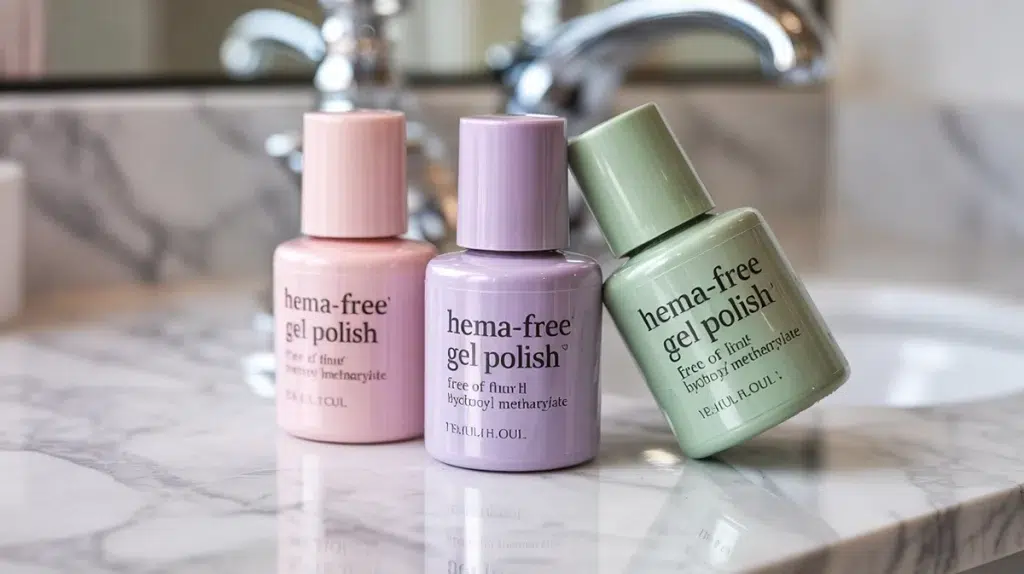
Close-up of HEMA-free gel polish bottles showing the clean ingredient labels.
Cracking the Code: Identifying HEMA in Labels
Don’t let pretty packaging fool you; always be an informed consumer. In 2026, labeling laws have improved, but you still need to know what to look for on the back of the bottle. To ensure you are truly getting HEMA-free gel polish, look for these specific chemical names on the INCI (International Nomenclature of Cosmetic Ingredients) list.
Common “Hidden” Names for HEMA
While many brands will proudly state “HEMA-Free,” others might use more technical terms. Look out for:
- Hydroxyethyl Methacrylate: This is the most common full name for HEMA.
- HEMA: The standard abbreviation.
- 2-Hydroxyethyl Methacrylate: A more chemical-specific designation.
What to Look for Instead
Safe HEMA-free gel polish often uses larger molecules called “oligomers” (like Di-HEMA Trimethylhexyl Dicarbamate) that are too large to penetrate the skin, making them much less likely to cause a reaction. If you see a label that lists dozens of long, unpronounceable words, don’t panic—just ensure that the specific HEMA monomers are absent. Rank Math and other health-focused apps can often help you scan these ingredients in seconds.
The HEMA-Free Salon Transition: How to Guide Your Technician
If you aren’t doing your nails at home, you need to be an advocate for your health in the salon chair. Many traditional salons still use HEMA-heavy products because they are cheaper to stock. Here is how to navigate the transition to HEMA-free gel polish with your technician.
Ask Before You Book
When calling a salon in London or NYC, don’t just ask for “gel.” Specifically ask, “Do you carry a professional HEMA-free gel polish range?” A high-quality salon in 2026 will be proud to offer these options.
Bring Your Own Bottle
If your favorite local spot hasn’t made the switch yet, most technicians are happy to use a product you provide, as long as it is a professional-grade brand. This gives you total peace of mind regarding the ingredients touching your nails.
Watch the Application
Even with HEMA-free gel polish, technique matters. Ensure your technician avoids getting any product on your skin or cuticles. In the rare case that a spill happens, it should be wiped away immediately with a clean tool before curing under the lamp.

Woman with a HEMA-free gel polish manicure enjoying coffee in a New York City cafe.
Expert Tips for Maintaining Sensitive Nail Beds
Transitioning to HEMA-free gel polish is only half the battle. If you have suffered from allergies in the past, your nail beds need extra love to recover.
- Hydration is Key: Use a high-quality cuticle oil twice daily. Look for oils containing jojoba, which mimics the body’s natural sebum.
- The “Naked” Week: Every few months, give your nails a week without any product. Apply a strengthening treatment that is also HEMA-free to build up the keratin layers.
- Sun Protection: Believe it or not, the skin around your nails is susceptible to UV damage from lamps. Wear fingerless UV-protective gloves during your appointment.
- Avoid Over-Buffing: Excessive filing thins the nail plate, making it easier for chemicals to seep through. Ask your tech to use a gentle buffer rather than a heavy e-file on the natural nail.
HEMA-Free Gel Polish FAQ
Does HEMA-free gel polish last as long as regular gel?
Yes! In 2026, the technology has advanced so that HEMA-free gel polish offers the same 14-21 day wear time as traditional gels, provided the application and curing are done correctly.
Can I use a regular LED lamp with HEMA-free products?
Usually, yes, but it is best to stay within the same brand ecosystem. Each brand calibrates its polish to cure at specific wavelengths, and using the matching lamp ensures a full, safe cure.
Is HEMA-free the same as “Vegan” or “Cruelty-Free”?
Not necessarily. While many HEMA-free gel polish brands are also vegan and cruelty-free, they are separate categories. Always check for the “Leaping Bunny” or “Vegan Society” logos if those are important to you.
Why do my nails still itch with HEMA-free polish?
You might be allergic to other acrylates, such as Di-HEMA or HPMA. If symptoms persist, it is best to see a dermatologist for a patch test to identify the exact culprit.
Is HEMA-free gel more expensive?
It can be slightly more expensive due to the higher quality of the alternative ingredients. However, consider it an investment in your health—fixing a severe allergic reaction costs much more in the long run!
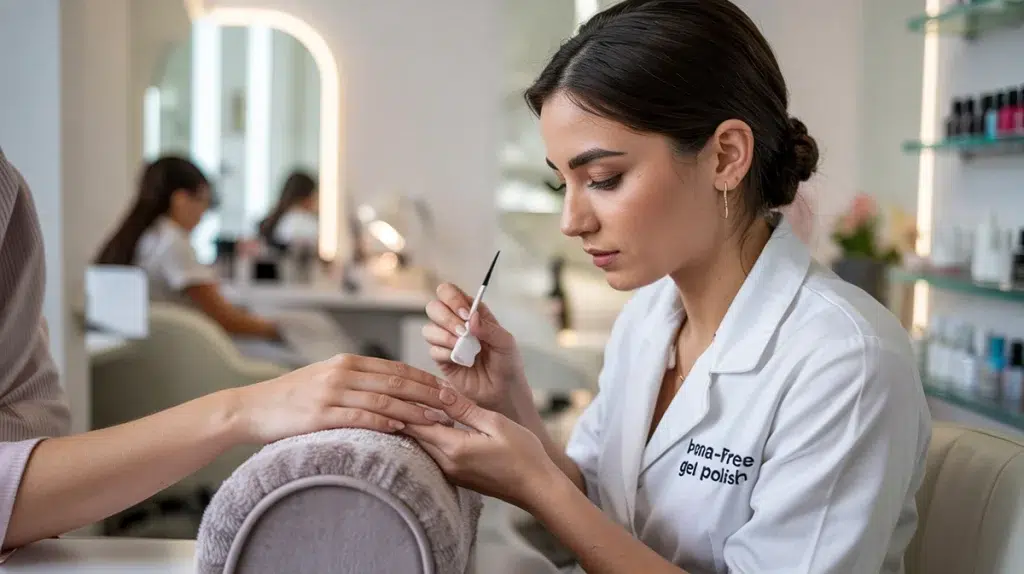
Professional application of HEMA-free gel polish in a high-end London nail salon.
Summary and Final Thoughts
The move toward HEMA-free gel polish in 2026 is a victory for everyone who loves beautiful hands. By being mindful of what we put on our bodies, we can enjoy the convenience of modern beauty without compromising our long-term wellness. Remember: a truly beautiful manicure starts with a healthy nail underneath.
HEMA-Free vs. Traditional Gel: Ingredient Comparison