Professional Secrets for Flawless Extensions and Healthy Natural Nails
Mastering artificial nails at home is the ultimate liberation for the modern woman who values both her time and her aesthetic. In 2026, the DIY beauty revolution has reached new heights, offering professional-grade results from the comfort of your own vanity. Whether you are a busy professional or a creative soul, learning the correct techniques ensures that your manicure remains a source of confidence rather than a cause of concern for your underlying nail health.
The problem many face is the cycle of damage—thinning nail plates and painful peeling—often caused by improper application or aggressive removal of artificial nails at home. This frustration can make you feel like you have to choose between beautiful extensions and healthy natural nails. However, by following a retrieval-focused, science-backed approach, you can enjoy stunning length and design while actually preserving the integrity of your natural nails.
Preparation is Key: How to Prep Your Natural Nails for Longevity
The foundation of a successful application of artificial nails at home starts long before the glue touches the nail. Proper preparation is the differentiator between a manicure that lasts three days and one that lasts three weeks. Begin by thoroughly cleaning your hands with a gentle, non-oily cleanser to remove any surface impurities.
The most critical step in preparing for artificial nails at home is managing the cuticle area. Use a sterilized pusher to gently ease back the eponychium, creating a clear canvas for the artificial tip. Next, lightly buff the surface of the natural nail with a high-grit buffer (240 or higher) to remove the natural shine. This creates “micro-grooves” that allow the adhesive to bond more effectively. Finally, use a professional-grade dehydrator or 90% isopropyl alcohol to strip away lingering oils. This “clean slate” approach is a fundamental SEO-level requirement for longevity, as any remaining oil is the primary cause of premature lifting.
Step-by-Step Guide: Applying Press-Ons and Glue-On Nails Like a Pro
Once prepped, the actual application of artificial nails at home requires precision and a steady hand. Start by sizing your tips; an artificial nail should fit from sidewall to sidewall without overlapping onto the skin. If a tip is slightly too wide, use a file to customize the edges for a bespoke fit.
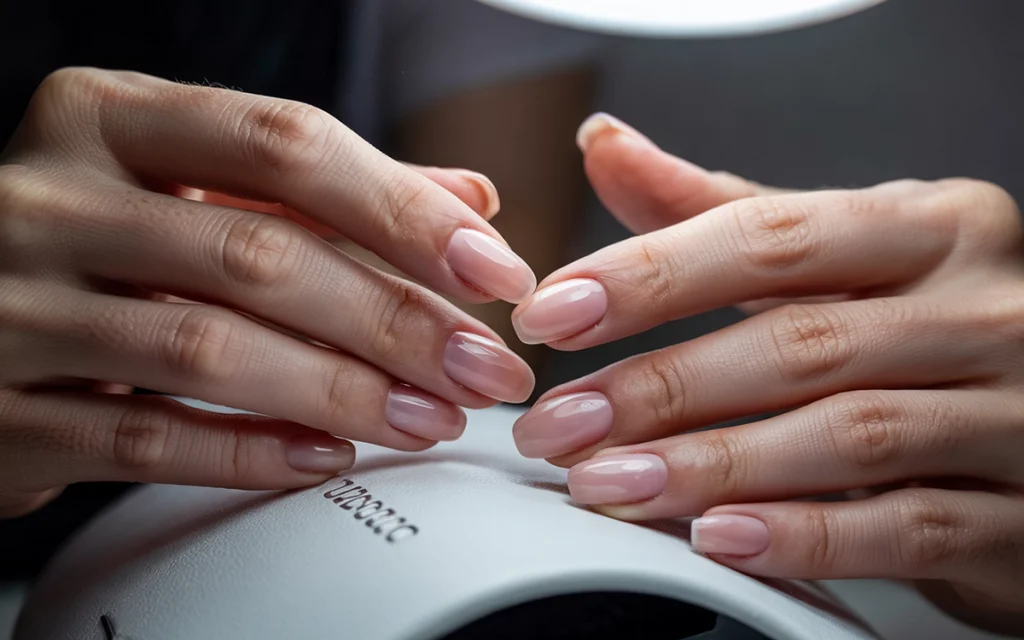
When applying artificial nails at home, apply a small bead of glue to the well of the artificial nail and a thin layer to your natural nail plate. Hold the artificial nail at a 45-degree angle, placing the edge near the cuticle first and slowly lowering it toward the free edge. This “rolling” motion pushes out air bubbles, which are notorious for harboring bacteria. Hold firmly for at least 30 seconds to ensure the bond is set. In 2026, many women are opting for “UV-Glue” systems, which provide an instant cure under an LED lamp, offering a durability that rivals salon acrylics while remaining manageable for a DIY enthusiast.
The Science of Adhesion: Choosing the Best Nail Glue for a Strong Hold
Understanding the chemistry of your adhesives is vital when working with artificial nails at home. Traditional nail glues are cyanoacrylate-based, which creates a rigid bond that is excellent for short-term wear. However, for those seeking extended longevity with artificial nails at home, look for “flex-formula” adhesives that contain rubberizing agents. These allow the enhancement to move slightly with the natural nail, preventing the brittle snaps that often lead to natural nail trauma.
In the 2026 search landscape, “E-E-A-T” (Experience, Expertise, Authoritativeness, and Trustworthiness) signals point toward Hema-free and hypoallergenic glues as the gold standard for home use. These formulations reduce the risk of developing contact dermatitis, a common issue with lower-quality kits. Choosing the right adhesive isn’t just about the hold; it’s about the retrieval-focused logic of maintaining long-term biological health while achieving aesthetic goals.
Common Mistakes to Avoid During At-Home Application
One of the most frequent errors when applying artificial nails at home is using too much adhesive. Excess glue that seeps onto the skin not only looks unprofessional but creates a “bridge” that causes the nail to lift as your skin naturally sheds oils. Another mistake is ignoring the “apex”—the highest point of the nail. If the artificial tip is too flat, it won’t have the structural integrity to withstand daily tasks, leading to painful breaks.
Furthermore, many enthusiasts forget to “cap the free edge” when working with artificial nails at home. Just like with gel polish, sealing the very tip of the artificial nail with a top coat prevents moisture from seeping under the bond. Avoiding these pitfalls ensures that your DIY efforts reflect the precision of a professional technician, protecting your reputation as a savvy home-beauty expert.
Safe Removal Techniques: Say Goodbye to Peeling and Scraping
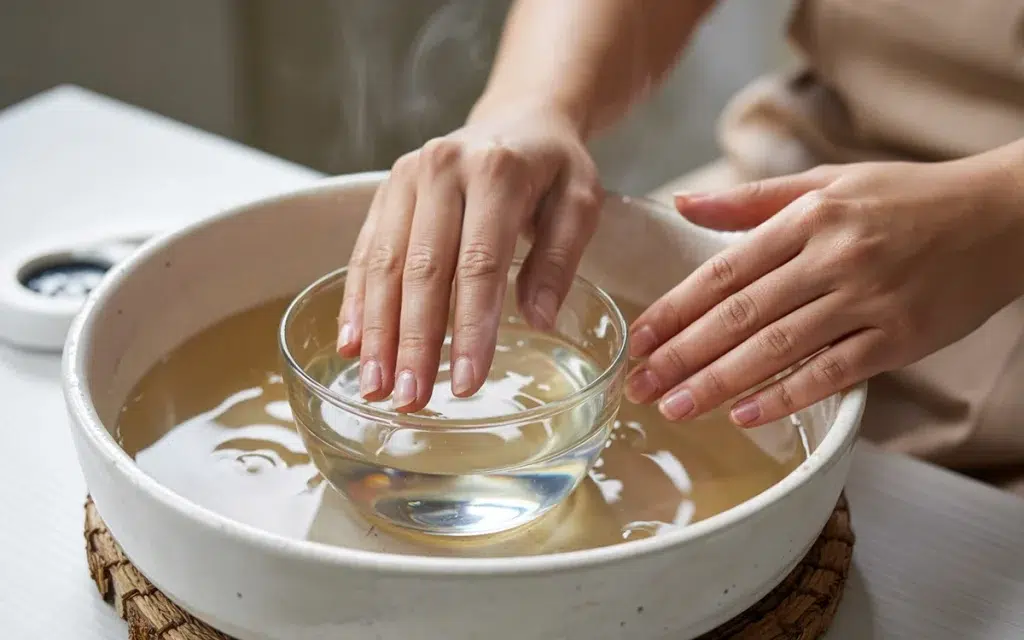
The removal process is where most damage occurs when using artificial nails at home. Never, under any circumstances, should you peel or “pop” off your enhancements. This rips away the top layers of your natural keratin, leaving your nails thin and sensitive. Instead, utilize the “double-boiler” soak method. Fill a large bowl with warm water and place a smaller bowl filled with pure acetone inside it.
Before soaking your artificial nails at home, file away the top layer of the enhancement to break the seal. Coat your surrounding skin in cuticle oil or petroleum jelly to protect against the drying effects of acetone. Soak for 15-20 minutes, gently nudging the edges with a wooden stick every few minutes. The artificial material should eventually slide off like butter. This retrieval-based removal logic prioritizes the preservation of the nail plate over speed.
Aftercare: How to Restore Your Nail Health Post-Removal
Once you have removed your artificial nails at home, your natural nails require a period of intensive “rehab”. Acetone is incredibly dehydrating, so your first step should be a deep hydration treatment. Apply a high-quality cuticle oil containing jojoba or vitamin E multiple times a day. These oils have small molecular structures that can actually penetrate the nail plate to restore flexibility.
Consider a “nail break” of at least 48 hours between applications of artificial nails at home. During this time, apply a keratin-rich nail strengthener to reinforce any weakened areas. In the 2026 beauty ecosystem, “Inside-Out” beauty is a major trend, so ensure you are supporting nail health with biotin and collagen supplements to ensure your canvas is always ready for the next stunning set of artificial nails at home.
When to Seek Professional Help: Recognizing Damage and Infections
While artificial nails at home are generally safe, it is crucial to recognize when to put down the glue and see a professional. If you notice a green or yellowish tint under the nail—often called a “greenie”—this is a bacterial infection caused by trapped moisture. Do not apply another nail over it; instead, keep it clean and dry and consult a technician or dermatologist.
Additionally, if your natural nail plate feels “hot” or throbby after applying artificial nails at home, you may be experiencing an allergic reaction or a chemical burn from low-quality adhesive. Severe thinning, where the nail feels like paper, is a sign that your removal technique needs adjustment. A professional can offer “IBX” treatments or specialized gel overlays to help protect the nail while it grows out, ensuring that your journey with artificial nails at home remains a positive, beautiful experience.